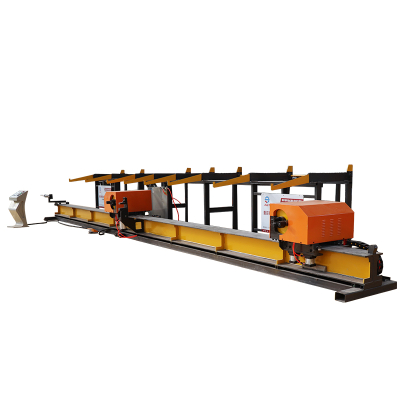
How to Bend Rebar Stirrups Automatically
Bending rebar stirrups automatically starts before the machine moves: with a clean drawing, a defined tolerance and a feeding plan. For a fabrication plant supplying pile cages, bridge decks or high-speed rail structures, the stirrup is a small component with a large effect on assembly time and inspection results. This article walks through the practical sequence of automatic rebar stirrup bending, the settings that decide dimensional accuracy, and the questions buyers should ask before choosing equipment.
Why stirrup bending deserves attention
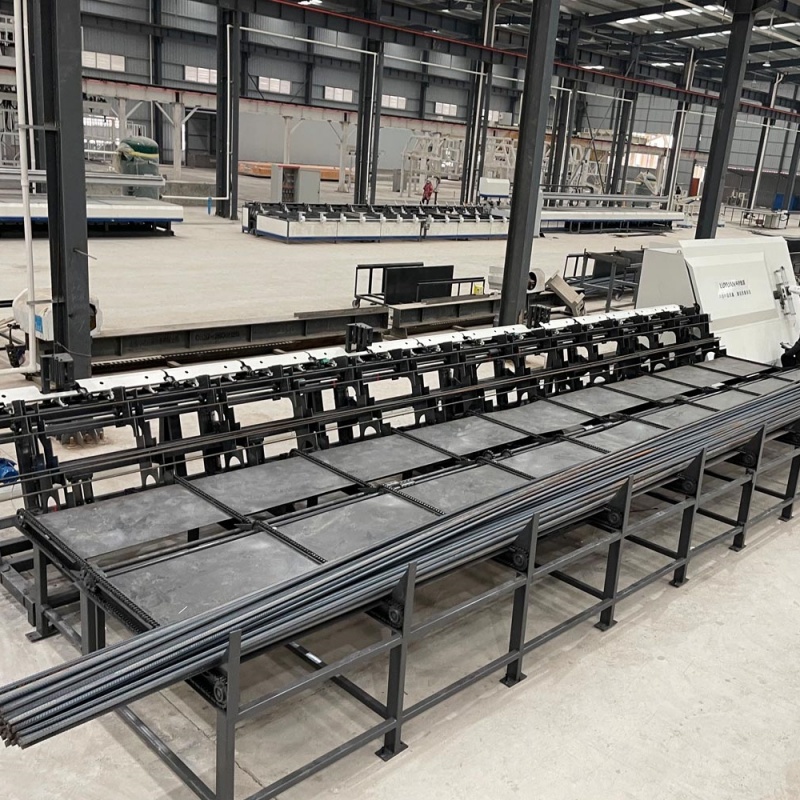
Stirrups, also called hoops or ties, close a reinforcement cage, resist shear forces and hold main bars in position. On a bored pile they keep the cage stable while it is lowered into the borehole; on a bridge beam or a high-speed rail slab they define cover and bar spacing that inspectors check before concrete is placed. Bench bending can produce acceptable hoops, but every piece depends on the operator's feel for springback, bar grade and tool wear. When a project needs thousands of identical pieces, that variability becomes a scheduling problem as much as a quality problem.
Overseas buyers are therefore looking less at a single speed figure and more at repeatability: can the machine hold the same leg length and hook angle from the first piece to the last, and can the setup be changed quickly when the drawing changes? Automatic rebar stirrup bending addresses both by linking feeding, straightening, bending and cutting into one controlled cycle.
The working sequence, step by step
Understanding the sequence helps operators diagnose problems and helps buyers compare machines on equal terms. A CNC stirrup bending machine normally completes the following steps:
Feeding and straightening. Coiled rebar is pulled through a straightening assembly. If the bar enters the bending head with residual curve, every dimension downstream shifts, so the straightening pass is the first place to check when output drifts.
Length measurement. The control system measures the bar and stops feeding at the programmed length. Encoder accuracy and stable grip determine whether leg lengths stay consistent over a long shift.
Bending. A moving bending head forms the corners and hooks around a fixed mandrel. Tool geometry, bar grade and bending radius all influence springback, which is why modern controls allow angle compensation rather than relying on a single fixed value.
Cutting. The finished hoop is cut free. A clean cut protects the next piece and reduces burr-related handling issues at the tying station.
Collection and stacking. Finished stirrups are gathered in batches, ready for cage assembly or transport. Simple collection design saves considerable manual handling over a full production day.
Settings that decide accuracy
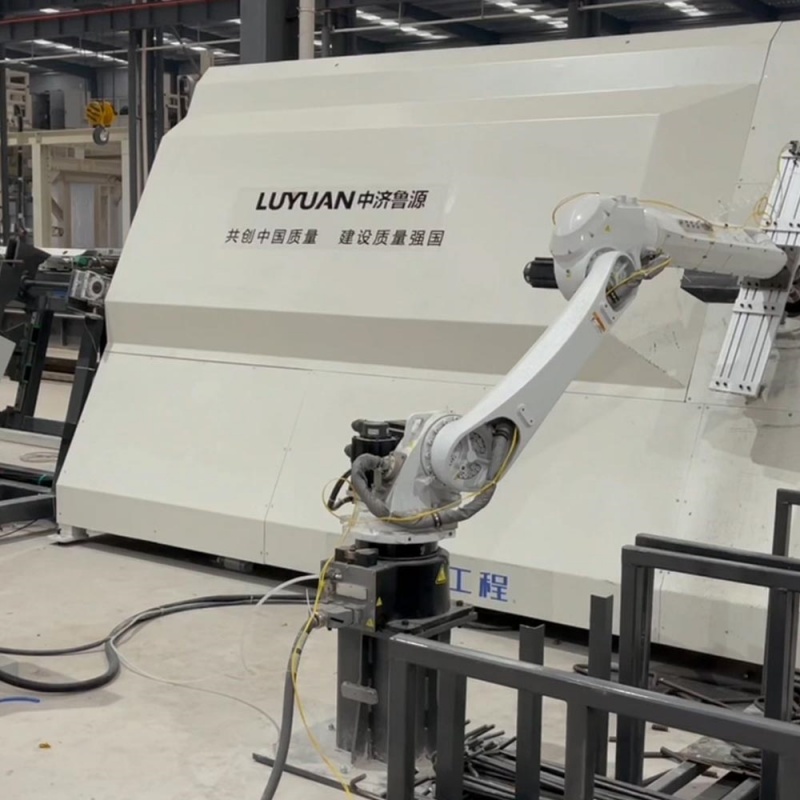
Three groups of settings matter most in daily production. The first is material data: rebar grade, diameter and coil condition. Higher-grade bar springs back more, so a program developed on one batch may need angle correction on another. The second is tooling: mandrel and blade wear changes corner radius and cut quality, and a worn tool often shows up as a gradual dimensional drift rather than an obvious fault. The third is program discipline: hook angle, leg length and bending order should be stored per drawing and recalled rather than re-typed by each operator.
Automatic rebar stirrup bending is also a throughput decision. Cycle time per piece, coil change time and changeover time between drawings together determine real output; a fast machine that takes a long time to reset for a new shape may be less useful in a plant with a mixed order book. Buyers should ask for a demonstration using their own drawings and bar grade, not only a catalogue capacity.
Maintenance is part of accuracy. Daily checks of the straightener, a scheduled tool inspection and a record of program revisions keep a machine predictable. This is the practical difference between owning an automatic stirrup bender and simply running one.
Where automatic bending pays off
The value is clearest where stirrup geometry repeats: bored-pile packages, bridge foundations and columns, high-speed rail structures and reinforcement plants serving several sites. In these settings a stable supply of hoops keeps cage assembly moving and reduces rework before inspection. For very small batches or unusual one-off shapes, manual bending still has a place; the economic case for a CNC stirrup bending machine grows with repetition and with the cost of inconsistent output.
Choosing the right configuration
Start with the drawing envelope: minimum and maximum bar diameter, stirrup dimensions, hook style and daily quantity. Then check the machine's working range, programming method, changeover procedure, power requirement and the availability of spare tooling. A supplier that asks for your drawings before quoting is usually a better partner than one that quotes only a model number.
Luyuan Machinery's stirrup bender range is designed for rebar fabrication plants and contractors that need repeatable hoop production for pile, bridge and rail work. The equipment suits buyers who want to move from bench bending to a controlled feeding-and-bending cycle, with configuration selected around bar range and project requirements rather than a single capacity claim.
Frequently asked questions
What is automatic rebar stirrup bending?
It is a process in which coiled rebar is straightened, measured, bent into hoops with defined hooks and cut in one programmed cycle, instead of being formed piece by piece on a bench.
How does a CNC stirrup bending machine control accuracy?
Accuracy comes from stable feeding and length measurement, correct tool geometry and angle compensation for springback. Bar grade and tool wear must be taken into account in the program.
Which projects benefit most from an automatic stirrup bender?
Projects with repeated stirrup sizes, such as bored-pile foundations, bridge structures, high-speed rail works and reinforcement plants supplying multiple sites.
What should I check before buying a stirrup bending machine?
Check bar diameter and hoop size range, hook styles, changeover method, cycle time, power supply, spare parts and whether the supplier can test your own drawings.
Can one machine handle different stirrup shapes?
Yes, where the sizes and hook styles fall within the machine's working range. Programs should be stored per drawing so repeat orders can be recalled without re-setup.
Final thoughts
Automatic rebar stirrup bending is a process decision, not just a machine purchase. Drawing range, tooling discipline and supplier support decide whether output stays consistent over a full project. Send your typical stirrup drawings, bar grade and target quantity to receive detailed parameters, technical documentation and a configuration proposal. Contact Luyuan Machinery to discuss a solution for your fabrication line and request a project quotation.