Automatic Steel Cage Forming Machine: An Efficient and Intelligent Solution Replacing Manual Processing

In summary, with its core advantages of high efficiency, precision and convenience, the automatic steel cage forming machine has successfully replaced the traditional manual processing mode. It not only greatly reduces the labor cost and management cost of construction enterprises but also promotes the industrialization and intelligent upgrading of the steel bar processing industry. Whether in large-scale infrastructure projects or small and medium-sized construction scenarios, the equipment can rely on its flexible adaptability and stable performance to provide strong support for project progress and quality, making it an ideal equipment in the modern construction field.


Product Details

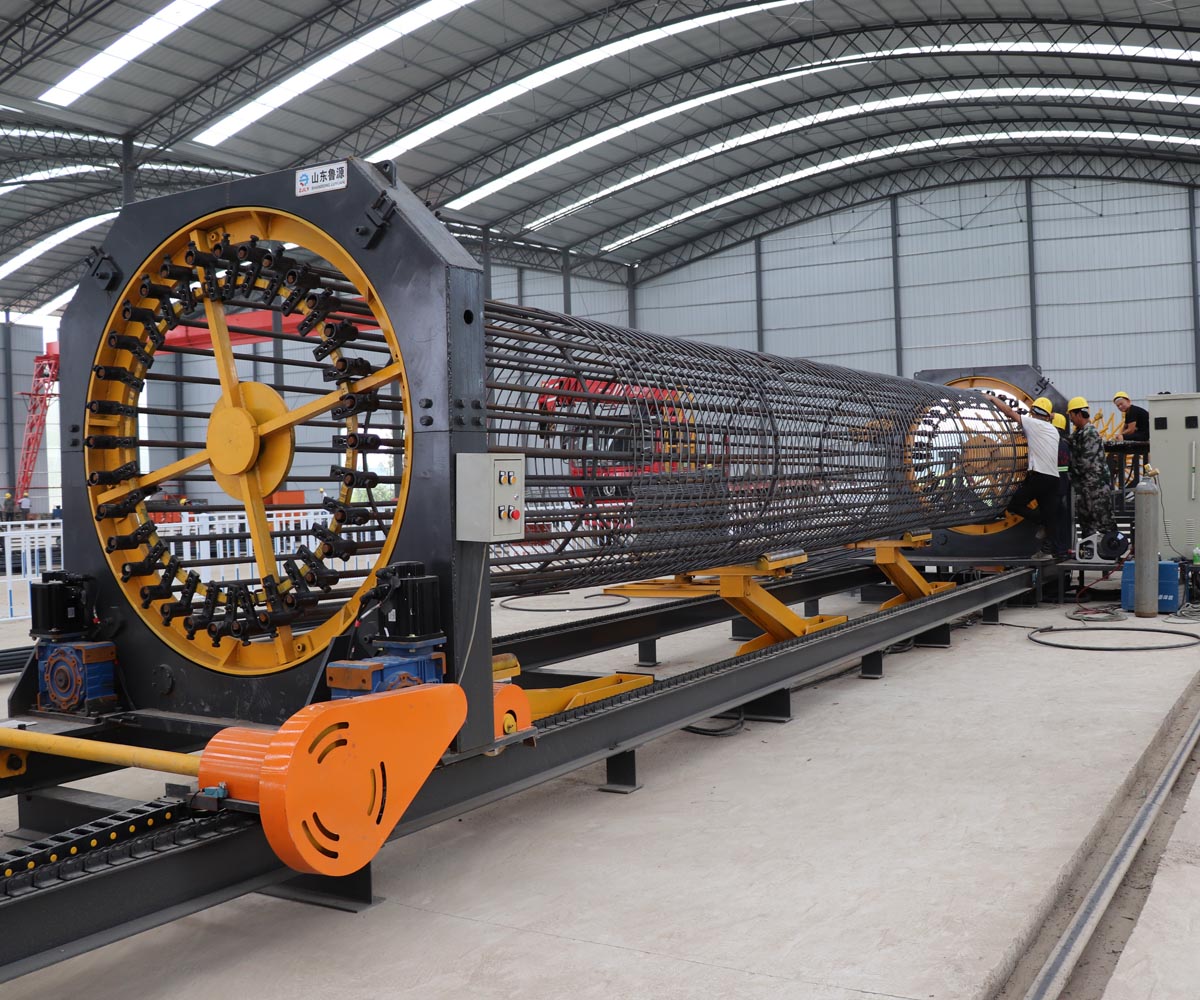
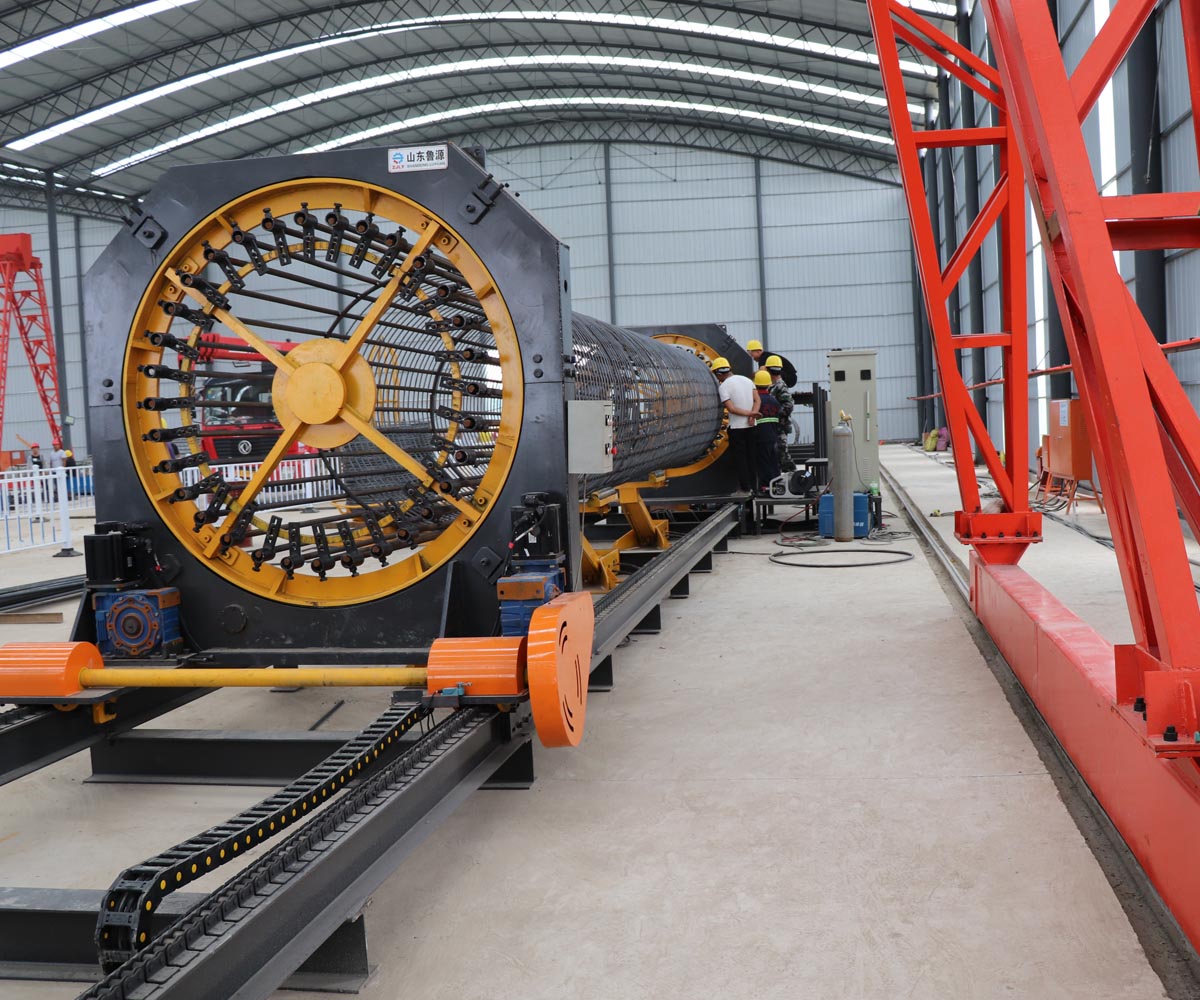
In traditional steel cage processing scenarios, the manual operation mode has long been plagued by pain points such as cumbersome processes, high labor intensity, and low processing precision. These issues not only restrict the construction progress but also make it difficult to ensure the stability of project quality. The advent of the automatic steel cage forming machine has completely broken this dilemma. By replacing traditional manual processing with intelligent technology, it fully simplifies the complex and difficult manual operation processes. With minimal manual assistance, the equipment can independently complete all core processes including main reinforcement feeding, stirrup straightening and winding, and precise welding between stirrups and main reinforcements, greatly improving processing efficiency and product quality. It has become a core equipment in infrastructure projects such as bridges, highways, and municipal utility tunnels.
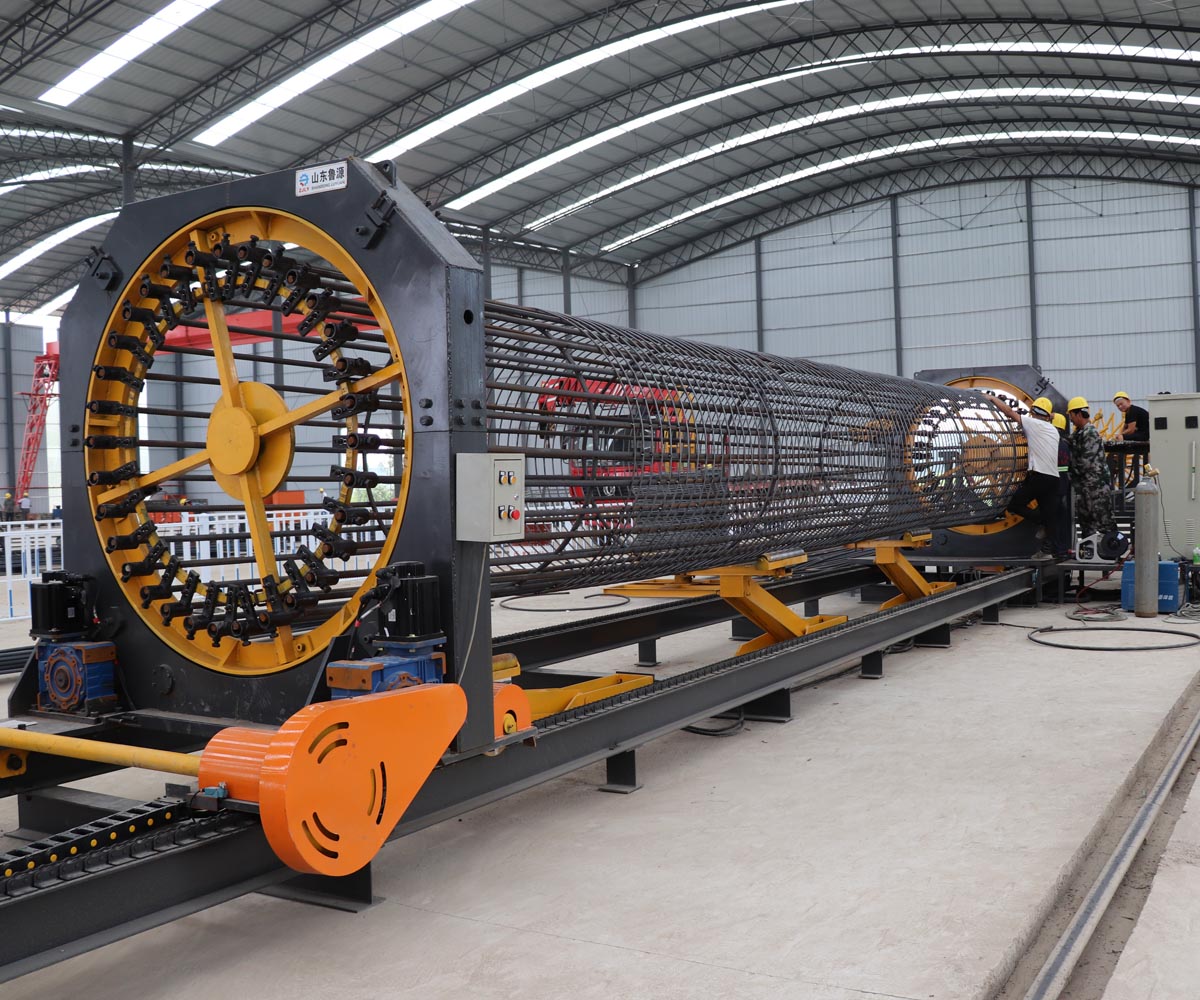
rebar cage making machine

Compared with traditional processing equipment and old models, this automatic steel cage forming machine has undergone multiple rounds of technological iterations, with multiple optimization upgrades to the core structure, making the overall design more reasonable. Structural optimization brings two core advantages: on the one hand, it achieves a significant reduction in production costs. On the premise of ensuring that the equipment performance is not compromised, it significantly enhances the product's market competitiveness, allowing more small and medium-sized construction enterprises to enjoy the dividends of intelligent processing; on the other hand, the stability and durability of the equipment are simultaneously improved, reducing later operation and maintenance costs and downtime due to failures, and ensuring the continuity of construction progress.
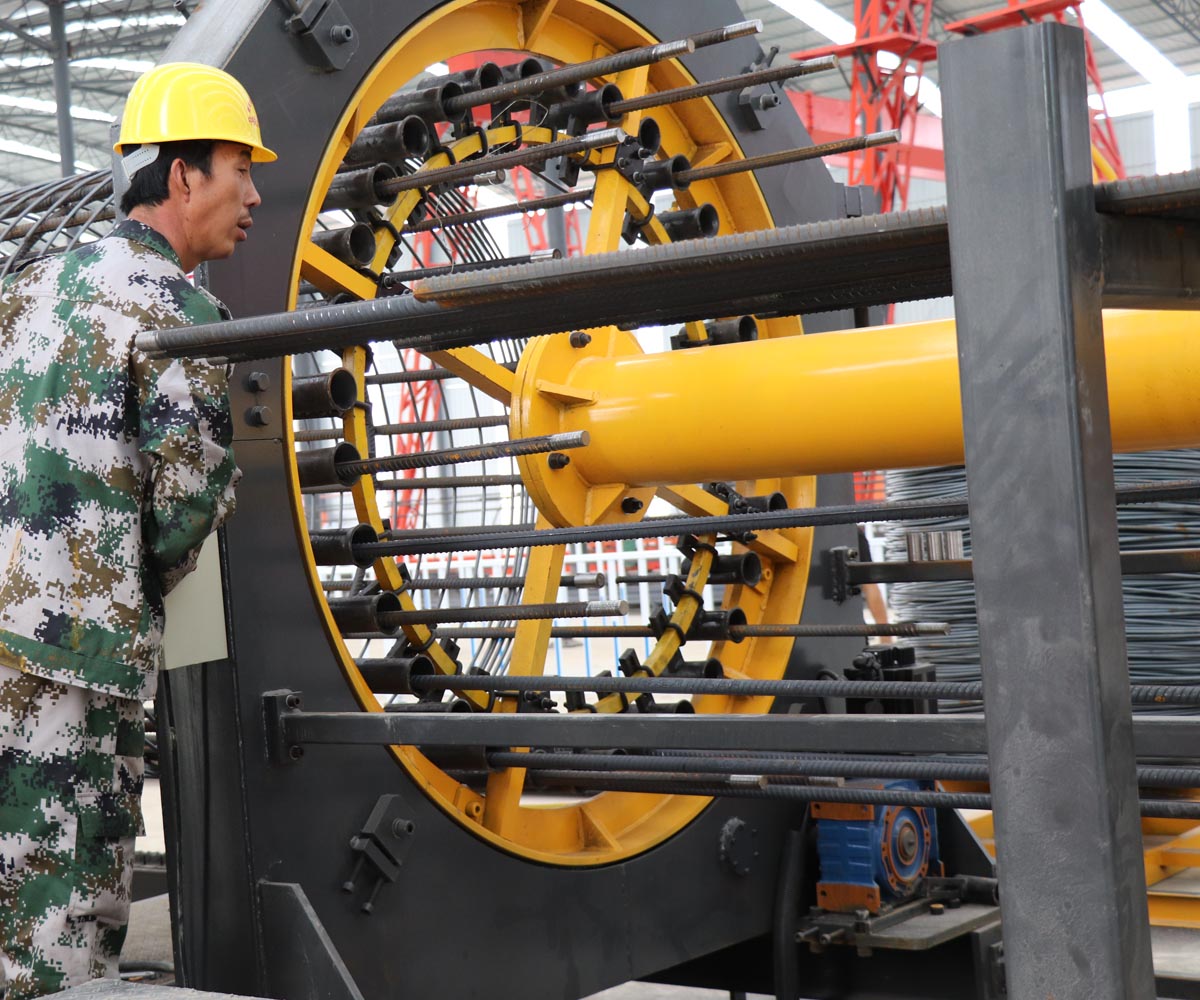
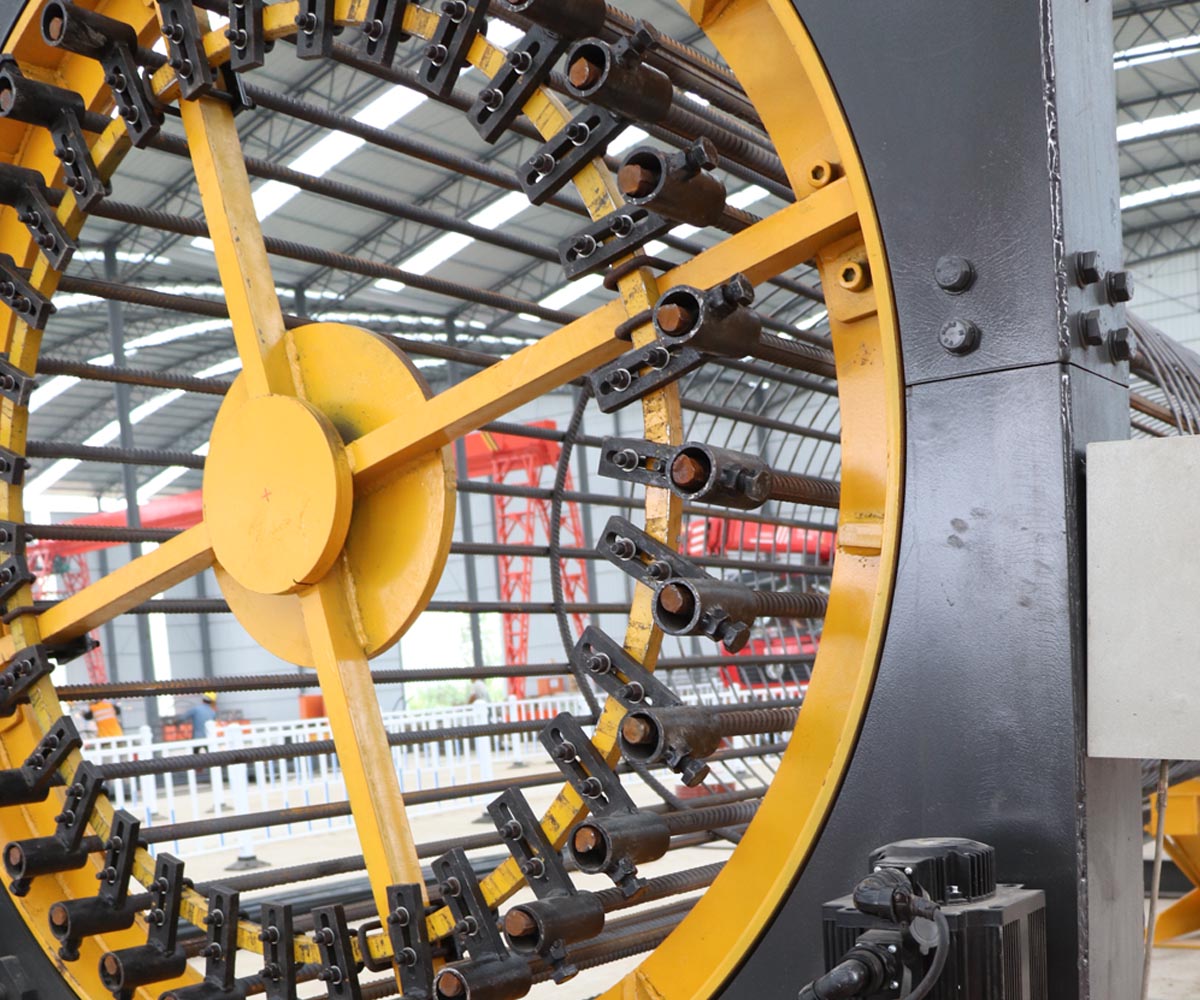
Among them, the plate-type design of the flexible mold ring and crossbar installation is a major highlight of the equipment. To meet the diverse needs of pile foundation specifications in infrastructure projects, this design supports flexible replacement of corresponding accessories according to different pile diameters and lengths without the need to replace the entire mold. This modular adaptation design is not only convenient for switching—only 2-3 workers are required to complete accessory replacement and debugging, with the switching time controlled within 30 minutes—but also effectively reduces the equipment investment cost for multi-specification production. It is both economical and practical, and can be widely adapted to the processing needs of various common steel cage specifications such as Φ800mm-2500mm.
In practical applications, the performance advantages of the equipment are particularly prominent. The traditional manual processing of a 12m standard steel cage requires 8-10 workers to cooperate, with a daily output of only 3-5 sections, and the finished product error is likely to exceed the industry standard of ±10mm. In contrast, with the assistance of 1-2 workers for feeding, this automatic forming machine can achieve a daily output of 15-20 sections. The processing precision is improved to a diameter error of ≤±5mm and a stirrup spacing error of ≤±3mm, which fully meets the requirements of the national *Code for Construction Quality Acceptance of Concrete Structure Engineering*. At the same time, the equipment adopts high-frequency inverter welding technology, which ensures uniform weld penetration and high firmness, with a tensile strength pass rate of over 99.8%. It effectively avoids quality hazards such as missing welding and insufficient welding that are prone to occur in manual welding, providing a solid guarantee for the structural safety of pile foundation projects.
To facilitate users to get started quickly, the equipment adopts a humanized design with a concise and clear operation process. The specific steps are as follows:
  1. Raw Material Pretreatment: According to the requirements of the construction drawings, perform fixed-length cutting and bending processing on the steel bars, and prepare the required main reinforcements and stirrups in advance to ensure that the length and bending angle of the steel bars are accurate, laying a foundation for subsequent processing.

  2. Parameter Presetting and Debugging: Refer to the steel cage design plan, input and adjust core parameters through the equipment's touch screen, including steel bar diameter, steel cage diameter, cage length, stirrup spacing, welding time, etc. After completing the parameter debugging, save the plan for quick call-up of subsequent products of the same specification.

  3. Main Reinforcement Feeding and Fixing: Put the pretreated main reinforcements into the equipment's feed port one by one, start the mechanical transmission device, and the equipment automatically completes the positioning, bending and fixing of the main reinforcements to ensure that multiple main reinforcements are evenly distributed and the spacing meets the design standards.

  4. Real-Time Monitoring of Operation: After the equipment is started, the operator must pay real-time attention to the operation status, focusing on monitoring whether the equipment has abnormal noise, violent vibration or parameter deviation. If problems are found, press the emergency stop button in time to avoid the expansion of faults.

  5. On-Site Maintenance and Cleaning: During the steel cage forming process, regularly clean up the slag, welding slag and other debris on the equipment to keep the equipment workbench clean, prevent debris from affecting the transmission precision or causing component jamming, and extend the service life of the equipment at the same time.

  6. Finished Product Removal and Inspection: After the steel cage forming is completed, the equipment automatically stops. The operator takes out the finished product according to the standard process, conducts a comprehensive inspection on the cage diameter, length, welding quality, etc. in accordance with the quality standards, and transfers it to the next process after confirming it is qualified.

  7. Unqualified Product Handling: If the finished product is found to have problems such as dimensional deviation and welding defects, it must be marked in time and repaired; for unrepairable unqualified products, they shall be scrapped and remade in strict accordance with construction specifications to prevent unqualified products from entering the construction site.
In summary, with its core advantages of high efficiency, precision and convenience, the automatic steel cage forming machine has successfully replaced the traditional manual processing mode. It not only greatly reduces the labor cost and management cost of construction enterprises but also promotes the industrialization and intelligent upgrading of the steel bar processing industry. Whether in large-scale infrastructure projects or small and medium-sized construction scenarios, the equipment can rely on its flexible adaptability and stable performance to provide strong support for project progress and quality, making it an ideal equipment in the modern construction field.


Leave your messages

Related Products

x

Popular products

x
x
