
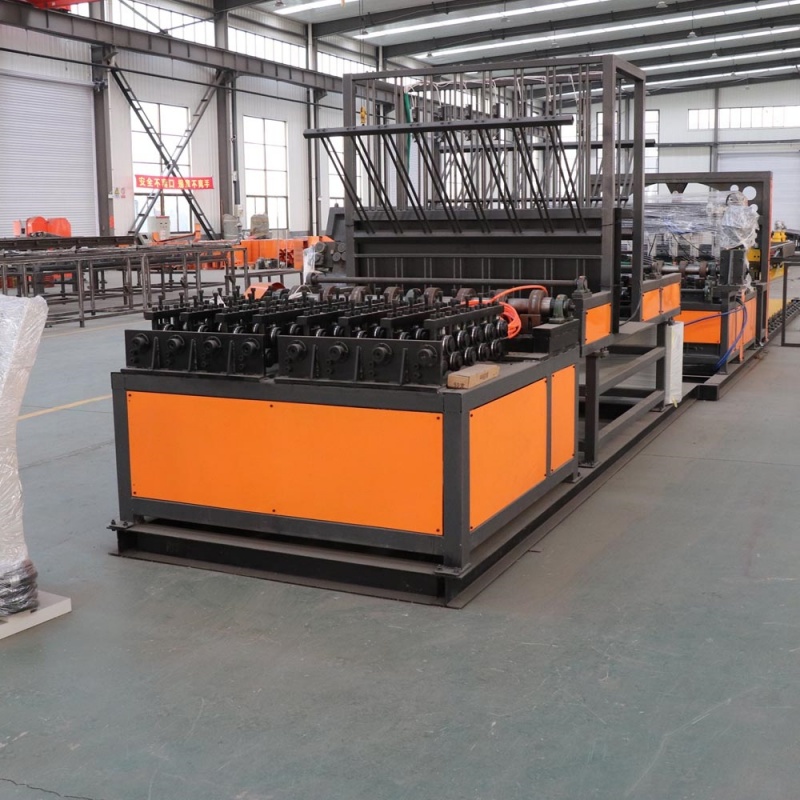
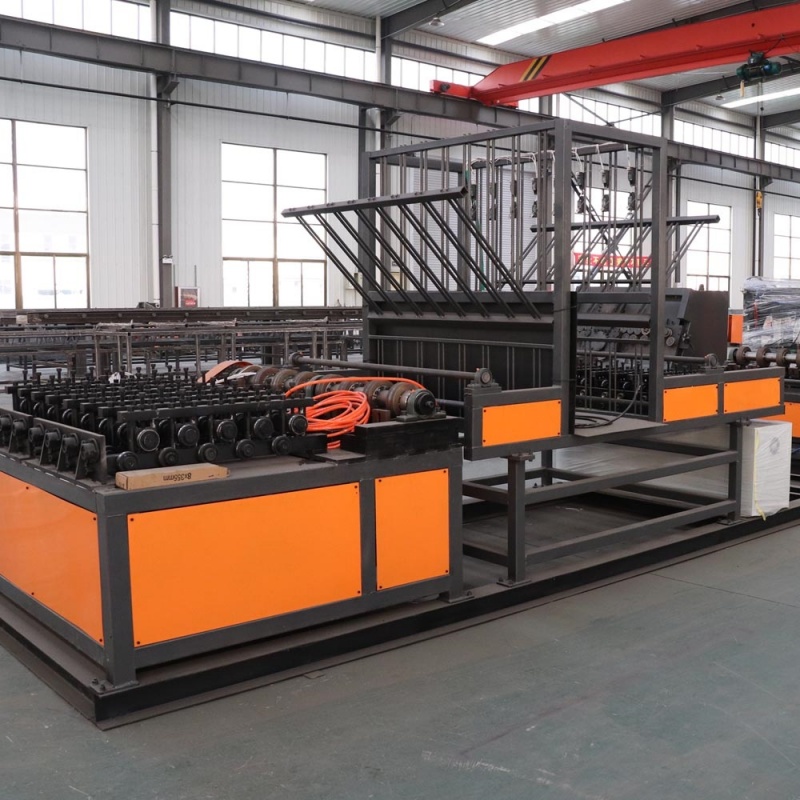
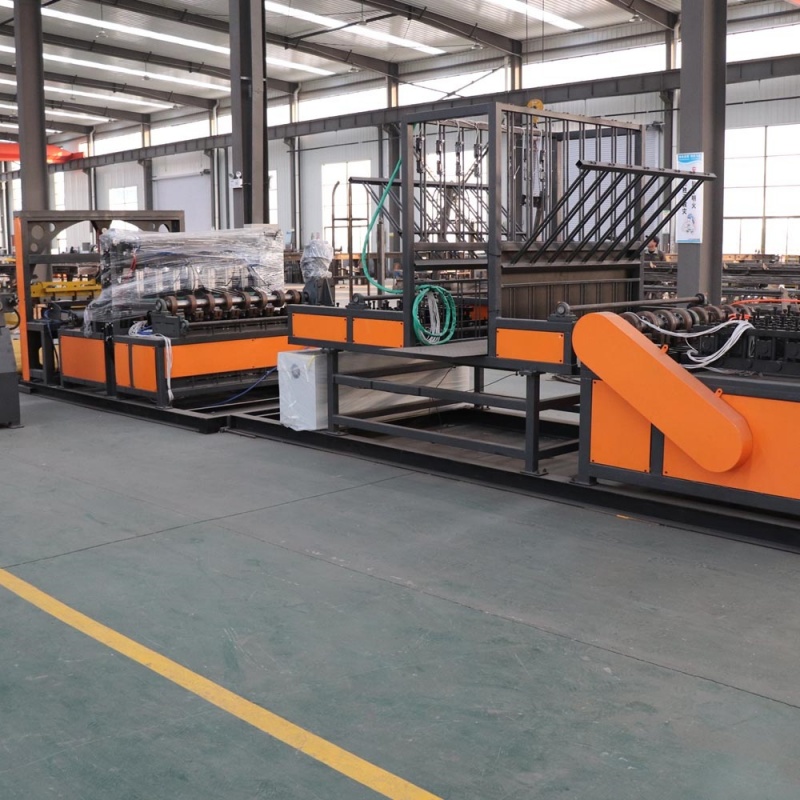
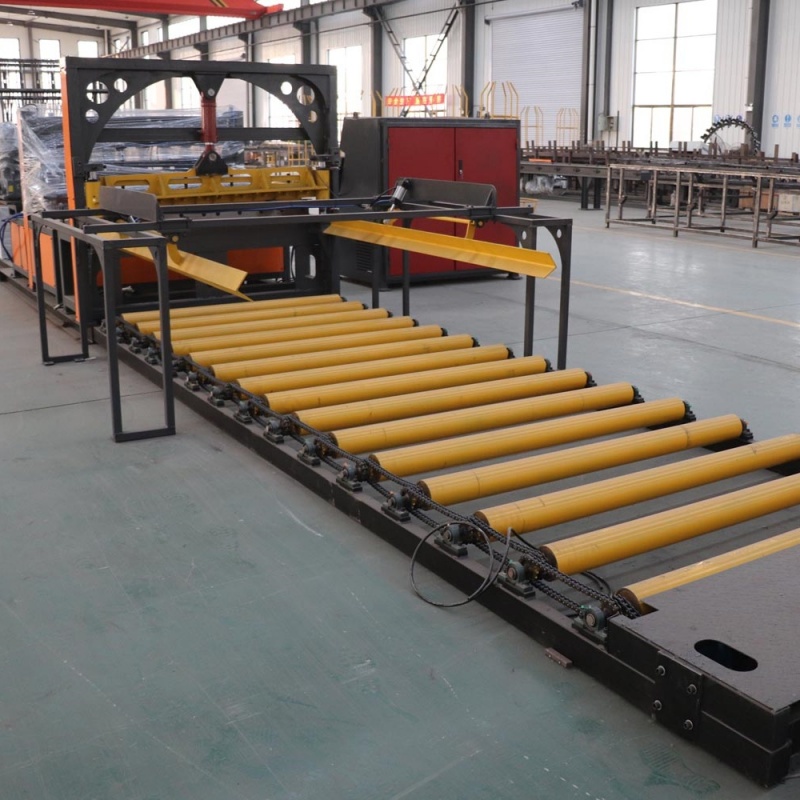
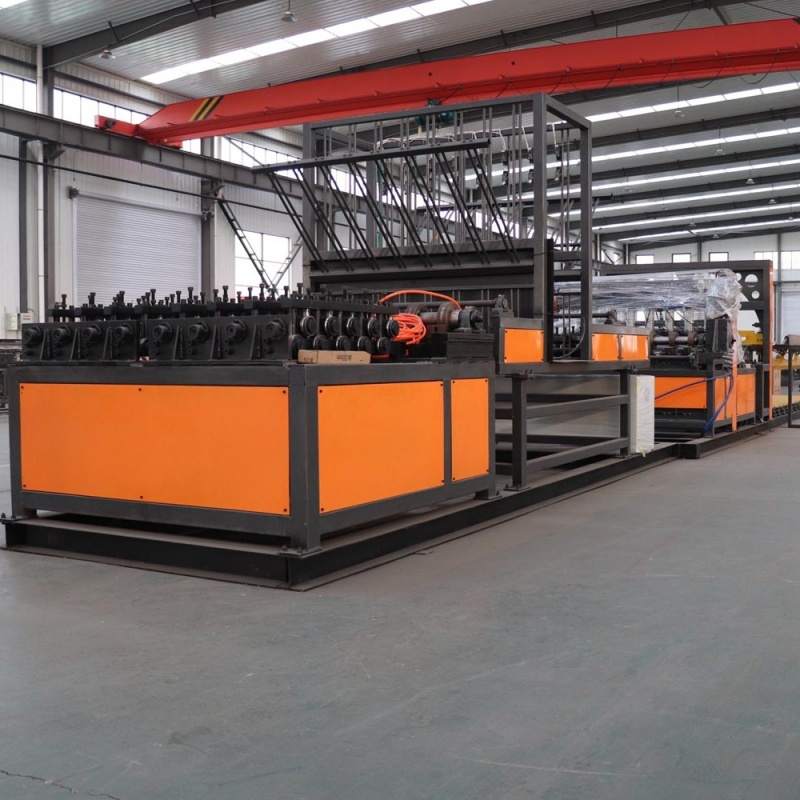
XGWJ-220 Wire Mesh Welding Machine: High-Efficiency Intelligent Welding Equipment Empowering Multi-Scenario Engineering Construction
As a professional core equipment for wire mesh forming, the XGWJ-220 Wire Mesh Welding Machine is tailor-made for large-scale production of wire mesh used in various engineering projects. Through an integrated design of "mechanical execution + intelligent electronic control", it realizes precise welding of wire intersection points and efficient full-process operation of mesh forming. The equipment consists of a main welding system, automatic loading and unloading device, intelligent electronic control unit and auxiliary support structure. Its core function is to reliably weld the intersection points of warp and weft wires of the wire mesh, significantly improving the overall strength and structural stability of the mesh. It completely solves the industry pain points of insufficient strength, low efficiency and large dimensional error of traditional manually bound meshes. It has been widely used in key projects such as industrial plants, bridge paving and subway projects, and has become a preferred equipment in the mesh processing field.
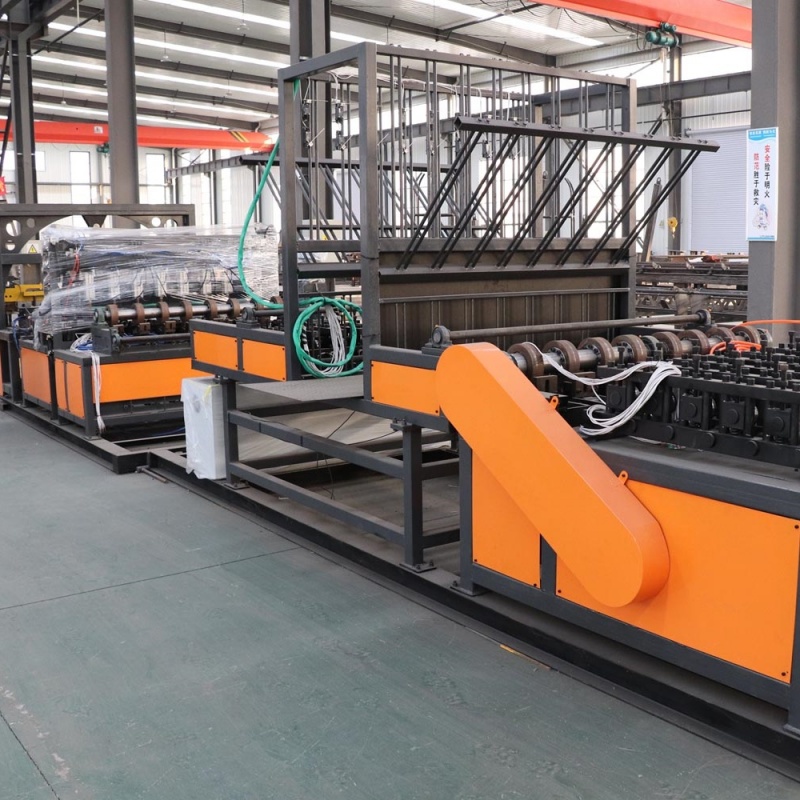
Core Structure and Structural Advantages of the Product
High-Strength Main Frame: The main frame is integrally welded with high-quality steel plates of more than 12mm thickness and national standard section steel. It undergoes aging treatment to eliminate welding stress, resulting in a solid and compact overall structure. It can effectively suppress vibration during high-frequency welding operations, ensuring stable equipment operation. The body deformation after long-term use is ≤0.5mm, providing a solid foundation for welding precision.
Precise Welding System: Equipped with 8 independent welding heads distributed in a matrix, matched with a 120KVA water-cooled welding transformer, and adopting secondary rectification welding technology. The welding current is stable and controllable, which can accurately control the welding quality of each intersection point and avoid problems such as insufficient welding and missing welding. The water-cooling system cools down in real time, ensuring stable welding performance of the equipment during continuous operation and extending the service life of core components.
Intelligent Feeding and Mesh Pulling Mechanism: The weft wire feeding mechanism adopts a novel stepping motor-driven automatic feeding design, combined with a photoelectric positioning sensor, which can realize precise feeding and positioning of weft wires with specifications of 3.5-8.0mm. The feeding error is controlled within ±0.3mm, ensuring uniform weft wire spacing. The mesh pulling link is equipped with a servo motor mesh pulling device, and the mesh pulling speed is intelligently linked with the welding rhythm, which greatly improves the mesh size precision and effectively avoids mesh deformation caused by manual mesh pulling.
Convenient Electronic Control Unit: Equipped with a 7-inch high-definition touch control cabinet, built-in multiple sets of mesh specification parameter templates, supporting one-key setting and storage of key parameters such as mesh size and welding spacing. The 4kw stepping motor is matched with an automatic braking system, with fast start-stop response and braking precision of 0.1s, which can accurately control the welding rhythm and mesh pulling distance. New operators can take up their posts after simple training.
Core Technical Parameters
Parameter Item | XGWJ-220 Model Index |
Welding Wire Diameter Range | 3.5-8.0mm |
Number of Welding Heads | 8 pcs (Matrix Distribution) |
Welding Speed | 30-65 rows/min, Stepless Adjustable |
Driving Power | 4kw Stepping Motor (with Automatic Braking) |
Welding Transformer | 120KVA, Water-Cooled Heat Dissipation |
Input Voltage | 380V (Three-Phase Five-Wire System) |
Mesh Diagonal Error | <2mm |
Equipment Overall Dimension (L×W×H) | 2.25m×4.9m×1.45m |
Equipment Weight | 2.0T |
Wide Application Scenarios
Industrial and Factory Construction: Welding of anti-cracking nets for floors and thermal insulation nets for walls in large industrial plants and workshops. The mesh has high strength and uniform size, which effectively improves the structural stability of floors and walls and reduces the risk of cracking in the later period.
Transportation Infrastructure Engineering: Welding of anti-cracking reinforcement nets for bridge pavements and expressway pavements. The high firmness of welding points can enhance the bonding force between the pavement layer and the base layer, extending the service life of the pavement; Welding of steel meshes for tunnel linings and main structures of subway stations. Precise size control ensures the fit between the mesh and the formwork, improving the construction quality of the lining.
Building and Municipal Engineering: Welding of steel meshes for floors and walls in residential buildings, replacing traditional manual binding and greatly improving construction efficiency; Welding of floor reinforcement nets for urban squares and large venues, adapting to the construction needs of large-span floors.
Special Scenario Construction: Customized mesh welding for special scenarios such as airport runway base reinforcement nets and port terminal protective nets. The mesh size and wire specifications can be adjusted according to needs to meet the requirements of high-strength engineering.
Equipment Operation Guide
1. Equipment Preparation Process
Equipment Inspection: Before starting the machine, check the overall status of the equipment, confirm that the main frame, welding heads, feeding mechanism and other components are firmly fixed without looseness or deformation; check the water level and water quality of the water-cooling system to ensure normal circulation; check that the circuit connections of the electric control cabinet are intact and the grounding is reliable.
Material Preparation: Prepare warp and weft wires with specifications of 3.5-8.0mm according to production needs, ensuring that the wire surface is free of rust, oil and other impurities; prepare tools such as shearing machines for mesh cutting and wire brushes for cleaning welding residues.
Parameter Presetting: Turn on the power of the electric control cabinet, select the corresponding mesh specification template through the touch screen, and set parameters such as weft spacing and welding speed. The welding speed can be adjusted according to the wire diameter. It is recommended to adjust to 30-40 rows/min when the diameter is large, and increase to 50-65 rows/min when the diameter is small.
2. Equipment Operation Steps
Turn on the main power switch, and after the electronic control system completes the self-inspection, start the water-cooling circulation system to ensure normal cooling of the welding transformer.
Adjust the height of the equipment operation surface to 80-100cm through the hydraulic support knob, adapting to the operator's height and improving operation comfort.
Put the warp wires into the warp wire positioning frame one by one, start the feeding mechanism, the weft wires automatically fall into the feeding station driven by the stepping motor, and the equipment automatically completes the cross positioning of warp and weft wires.
Press the welding start button, 8 welding heads work synchronously. After welding a row of intersection points, the servo mesh pulling mechanism drives the mesh to move accurately and enters the next row of welding process, with full automatic operation throughout.
When the mesh reaches the preset length, the equipment stops automatically. Use a shearing machine to cut the mesh, and clean the residual welding slag at the welding points with a wire brush to complete the finished product collection.
3. Operation Notes
Related Products


