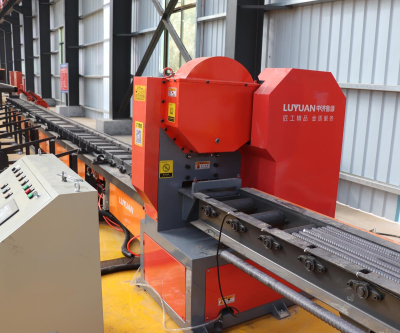
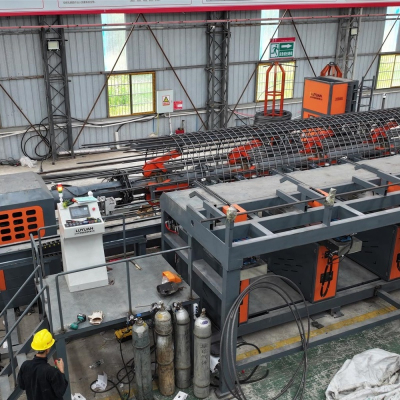
The Future of Automatic Rebar Cage Manufacturing
Rebar cages are the hidden skeleton of every pile foundation, yet on many job sites they are still tied together by hand, one bar at a time. That traditional approach is slow, depends heavily on skilled welders, and produces cages of uneven quality. As infrastructure projects grow in scale and delivery deadlines tighten, contractors and rebar processing factories around the world are asking the same question: how can cage production keep up? Automatic rebar cage manufacturing is the answer that is steadily reshaping the industry, and understanding it has become essential for anyone purchasing cage-making equipment.
Why Automatic Cage Manufacturing Matters Now
For buyers of rebar processing equipment, the decision is no longer simply about price. A bored pile project may require dozens or even hundreds of cages, each several meters in diameter and many meters long. Manual production lines struggle with three persistent problems: inconsistent welding quality, high labor costs, and limited daily output. When a piling schedule slips because cages are not ready, the cost of idle drilling rigs quickly exceeds the savings of a cheap manual process.
Overseas buyers searching for cage production solutions are usually facing one of these pressures: a large infrastructure tender that demands proven production capacity, a rebar fabrication plant that wants to take on more orders with the same workforce, or a quality specification that manual tying cannot reliably meet. Automatic manufacturing addresses all three by combining mechanized rotation, controlled welding, and standardized positioning of bars.
How an Automatic Rebar Cage Production Line Works
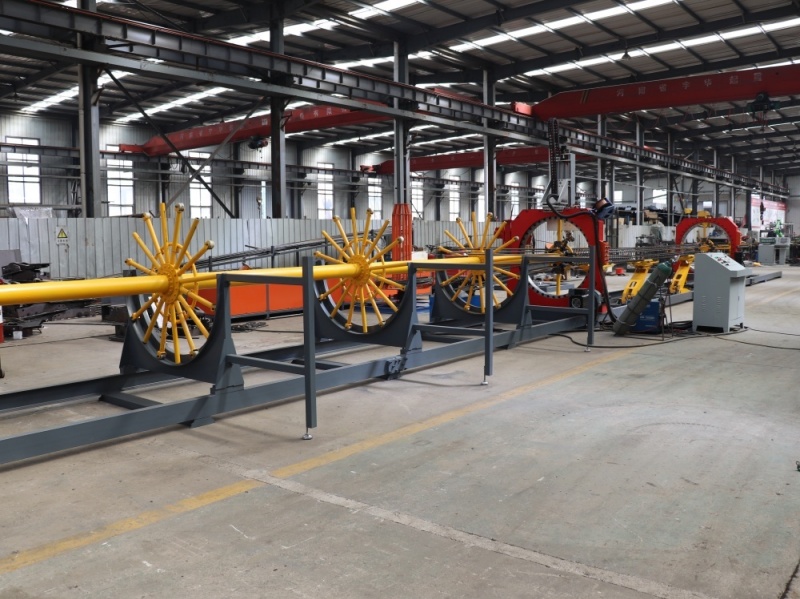
In a modern automatic cage welding machine, two sets of rollers rotate the main bars while a moving welding head travels along the cage and fixes the stirrup or spiral bars in place at controlled spacing. The pitch of the spiral is set digitally, so every ring is welded at exactly the same distance from the last one. The main bars are clamped and supported throughout the process, which keeps large diameter cages straight and prevents the oval deformation that often appears in hand-built cages.
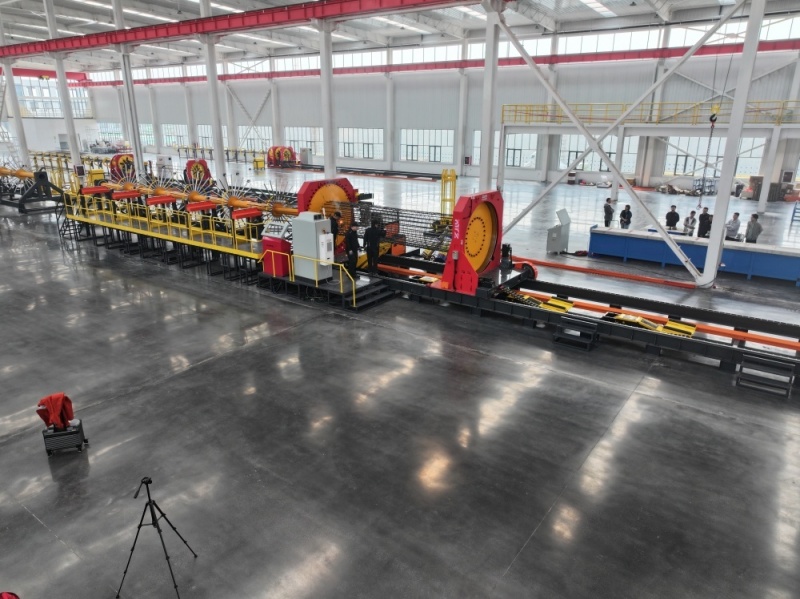
The result is a cage with uniform geometry, consistent weld strength, and far less rework. Operators do not need years of welding experience; after short training they can load bars, set parameters, and supervise production. This shift from craft labor to supervised machine operation is the core reason factories can raise output without proportionally raising headcount.
Key Technology Trends Shaping the Industry
Higher automation of feeding and positioning. Newer lines reduce manual bar handling with automated loading tables and servo-controlled positioning, shortening the changeover time between different cage diameters.
Digital control of welding parameters. Welding speed, pitch, and current are set on a control panel, which makes quality reproducible across shifts and across factories.
Support for large diameter and long cages. Demand from bridge and high-speed rail projects pushes equipment to handle heavier main bar configurations and longer cage sections with stable rotation.
Cautious but growing interest in production data. Some manufacturers are beginning to record output and fault data per shift, giving plant managers a clearer picture of real productivity.
Where These Cages Are Used
Automatic cages serve bored pile foundations for bridges, expressways, high-speed railways, urban metro lines, port works, and building foundations. In piling projects for river crossings, for example, cages of 1.2 to 2.5 meters in diameter are produced continuously and delivered to the drilling site in sections. Rebar processing plants that supply multiple construction sites benefit most: a single automatic line can feed several projects at once, something a manual workshop can rarely achieve.
Choosing the Right Machine for Your Projects
The right configuration depends on the cage diameters, main bar quantities, and daily output your projects require. A practical starting point is our automatic rebar cage welding machine, which is designed for pile cage production in medium and large fabrication plants. It covers common diameters used in piling work, supports adjustable spiral pitch, and is built around a rotating roller bed with a traveling welding head, so quality stays consistent from the first cage of the day to the last.
When evaluating any machine, we recommend comparing three things with your supplier: the diameter range it actually supports with stable rotation, the welding method and spare parts supply in your region, and the level of operator training included. A machine matched to your bar schedules and site logistics will pay back faster than one chosen on specification sheet alone.
Frequently Asked Questions
1. What is an automatic rebar cage welding machine?
It is a production machine that rotates main bars on roller supports and welds spiral or stirrup bars around them with a traveling welding head, producing complete pile cages with uniform geometry and consistent weld quality.
2. How much faster is automatic production compared with manual tying?
The improvement depends on cage size and bar configuration. In practice, a single machine operated by a small team can replace the daily output of a much larger manual crew, and quality is more stable because pitch and welding parameters are machine controlled.
3. What cage diameters can be produced?
Most machines cover the diameters commonly used in bored piling. You should confirm the exact range with the manufacturer against your project specifications, including main bar quantity and stirrup spacing requirements.
4. Is it difficult to train operators?
No. Because parameters are set on a control panel and the machine guides the process, operators usually learn loading, parameter setting, and supervision within a short training period provided by the equipment supplier.
5. How do I select the right configuration for my factory?
List your typical cage diameters, main bar counts, daily demand, and available workshop space, then ask the manufacturer to recommend a model and optional modules such as supporting rollers or loading tables that match your workflow.
Summary
Automatic rebar cage manufacturing is moving from a competitive advantage to an industry baseline. It delivers consistent weld quality, reduces dependence on scarce skilled welders, and gives rebar factories the capacity to serve multiple projects simultaneously. For buyers planning equipment investment, the safest path is to match machine configuration to real project data rather than to brochure figures.
If you are evaluating cage production equipment for an upcoming project, our engineering team can review your cage specifications and production targets, then recommend a suitable configuration. Contact us to get detailed parameters, request technical documentation, or receive a project quotation for an automatic rebar cage welding machine.