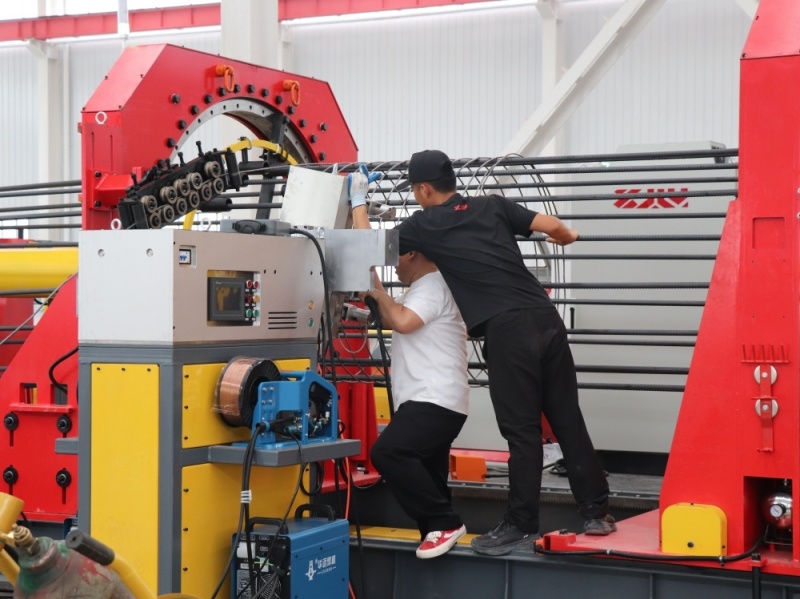
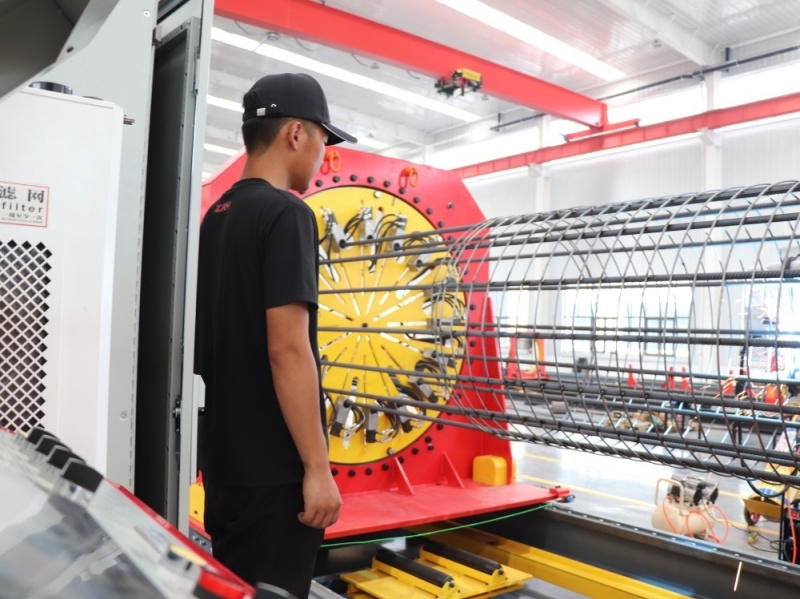
Choosing a high-quality automatic welding steel cage rolling machine is critical for pile foundation, bridge, and high-speed railway construction projects. Many buyers focus only on equipment appearance, price, or nominal parameters while ignoring core performance and actual construction stability. This professional selection guide covers core equipment differences, manufacturer inspection standards, common purchasing pitfalls, budget-matching solutions, and on-site verification principles to help engineering teams select a cost-effective and reliable automatic steel cage rolling machine.

1. Core Differences of Automatic Welding Steel Cage Rolling Machines
The performance gap between different automatic welding steel cage rolling machines does not lie in shell thickness or external structure. The fundamental differences come from four core configurations: head rotating speed, welding accuracy, PLC control system, and hydraulic station matching degree.
A qualified automatic steel cage rolling machine is not merely “weldable”. Instead, it must deliver stable welding, high continuous efficiency, and labor-saving operation in long-term construction. Many low-cost devices claim high production efficiency on paper but suffer from frequent debugging, continuous arc breaking, and unstable molding during actual operation. These faults lead to construction delays and increased labor costs.
Therefore, the primary selection standard is to evaluate the manufacturer’s professional understanding of pile foundation welding technology, rather than only checking external equipment configurations.
2. Three Key Dimensions to Inspect Steel Cage Rolling Machine Manufacturers
To screen reliable manufacturers of automatic welding steel cage rolling machines, focus on three practical and authoritative inspection dimensions:
2.1 On-site Project Delivery Cases
Practical construction cases are the most intuitive proof of equipment adaptability. Buyers should verify the manufacturer’s completed and ongoing project cases, especially the actual operation status of their steel cage rolling machines on local construction sites. Stable long-term operation on real projects proves that the equipment can adapt to complex construction environments.
2.2 Mature Core Component Supply Chain
The stability and service life of an automatic welding steel cage rolling machine depend heavily on core parts, including reducers, servo motors, and welding hosts. Formal and reputable manufacturers adopt industry-mature supporting components. High-quality core parts effectively reduce failure rates, ensure consistent welding accuracy, and extend equipment service life.
2.3 After-sales Response Efficiency
Pile foundation construction involves high site shutdown costs. Empty verbal warranty promises are far less practical than efficient after-sales service. A trustworthy manufacturer must provide rapid fault response and on-site solution support to ensure continuous construction progress and minimize engineering losses.
3. Common Purchasing Pitfalls of Automatic Steel Cage Rolling Machines
3.1 Avoid Blind Low-cost Customization Traps
Many small factories claim to support full-spec customization of steel cage rolling machines. However, most customized equipment has poor precision, resulting in uneven main reinforcement spacing, overall size deviation, and unqualified welding molding.
Before purchasing, confirm your project’s core parameters clearly: cage diameter range, main reinforcement diameter, and stirrup spacing requirements. Send these detailed working conditions to the manufacturer and request an official equipment configuration list and production capacity calculation report. Manufacturers that offer random quotations without confirming project parameters should be eliminated directly.
3.2 Reject False Intelligent Welding Publicity
Do not trust exaggerated “intelligent numerical control” marketing content in brochures. The actual operating state is the only valid evaluation standard. Before cooperation, ask for real equipment operation videos or conduct on-site inspections at project sites.
Focus on three key welding quality indicators: full and solid welding spots, no missing welding or false welding, and no stalling or frequent failures during long-term operation. In addition, request a complete list of wearing parts, including welding torches, contact nozzles, and copper sleeves. Clarify the replacement cycle and procurement cost of consumables to evaluate long-term operation and maintenance costs.

4. Hard Standards for Judging Manufacturer Strength
Ignore superficial marketing highlights and judge the comprehensive strength of steel cage rolling machine manufacturers through three core indicators:
4.1 Independent Production and Processing Capacity
Distinguish self-produced equipment from assembled products. Powerful manufacturers have independent mechanical processing workshops and complete production and quality control systems. Self-produced rolling machines feature higher precision, better process consistency, and more stable quality than fully assembled equipment.
4.2 Core Technical R&D Reserves
The number of staff cannot represent technical strength. The key is whether the manufacturer has independent core technologies in automatic welding processes and PLC intelligent control algorithms. Core technical reserves determine the equipment’s intelligence, stability, and fault tolerance in complex construction scenarios.
4.3 Repeat Customer Repurchase Rate
The repurchase rate of old customers is the most authentic data that cannot be falsified. A high repurchase rate proves that the manufacturer’s equipment quality, welding performance, and after-sales service have been fully recognized by engineering users.
5. Cost-effective Selection Solution for Limited Budget
There is no need to blindly purchase high-end premium models with excessive brand premium. The core selection principle isworking condition matching priority. Split equipment functions into mandatory core functions and optional extended functions to optimize budget allocation.
5.1 Mandatory Core Functions (Necessary)
Automatic welding system, variable frequency speed regulation, and stable cage dragging structure are basic guarantees for construction efficiency and finished product quality. These core configurations must be prioritized to ensure stable daily operation.
5.2 Optional Extended Functions (Upgradable Later)
Remote fault diagnosis, touch screen data recording, and mobile terminal monitoring are intelligent extended functions. For conventional construction projects, these functions can be upgraded later without unnecessary upfront investment.
In short, equipment stability, low failure rate, and welding accuracy are far more important than redundant intelligent functions.
6. On-site Test Verification Standard (Final Inspection)
Parameter sheets, marketing cases, and product introductions are all auxiliary references. On-site machine testing is the most reliable verification method.
It is recommended to conduct on-site test runs in the manufacturer’s factory before purchasing. Use the actual steel bars of your project for trial welding. After the test, measure the steel cage size on-site and inspect the overall welding quality intuitively. Formal and powerful manufacturers fully support customer material testing. On-site verification can effectively avoid equipment precision errors and quality hidden dangers.
Selecting a qualifiedautomatic welding steel cage rolling machine does not depend on price or appearance, but on core configuration stability, manufacturer technical strength, and after-sales guarantee. Combining actual project working conditions, verifying real machine performance, and rationally matching budgets are the key to purchasing high-cost-performance steel cage processing equipment for pile foundation engineering.