Best Reinforcement Cage Machine for Piling Projects
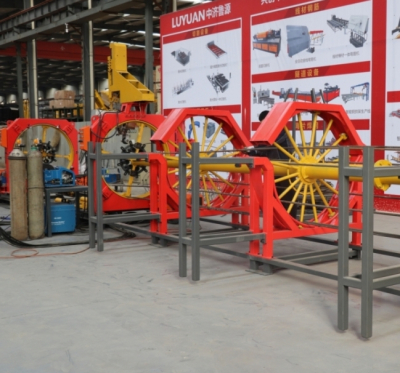
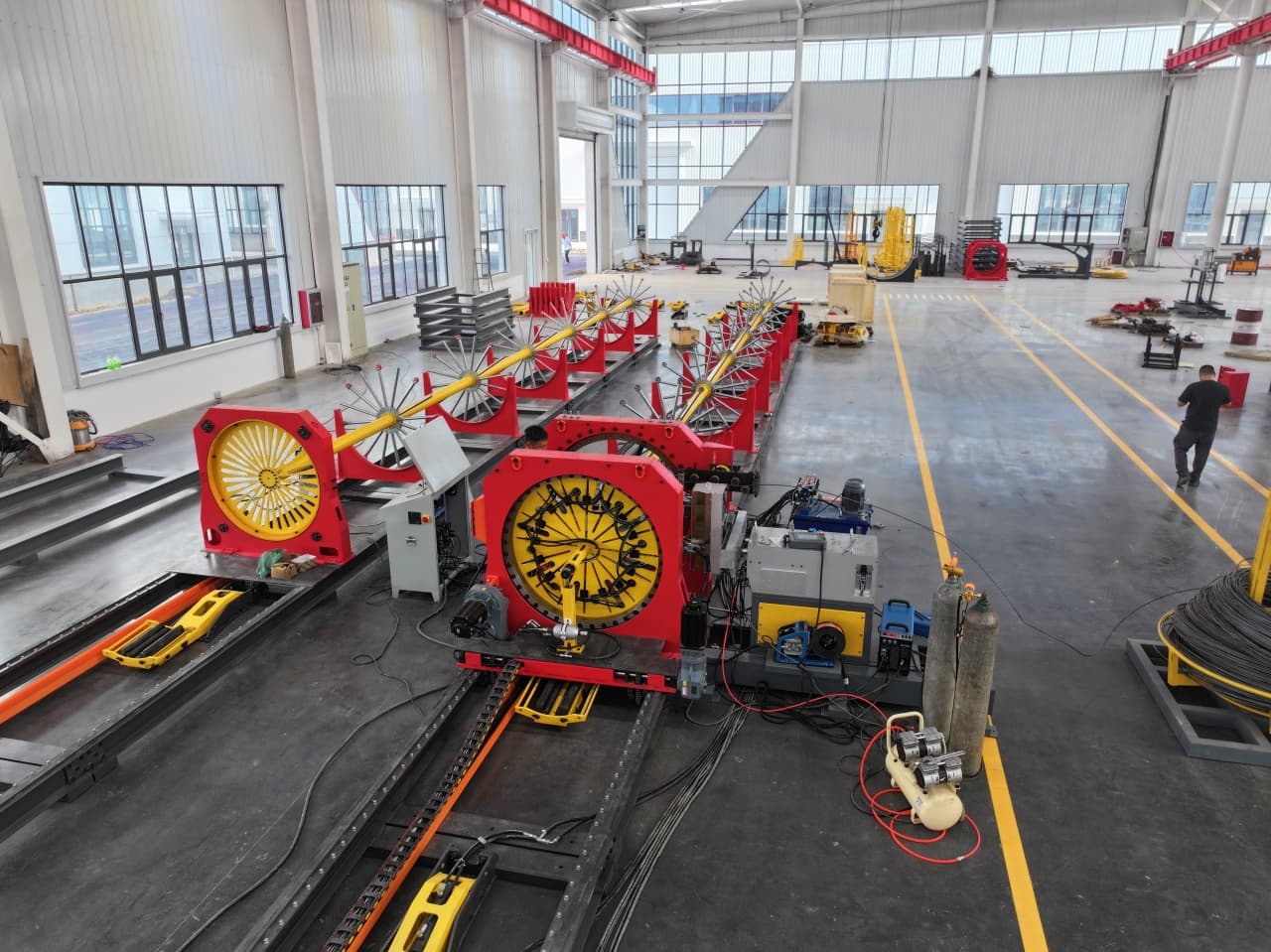
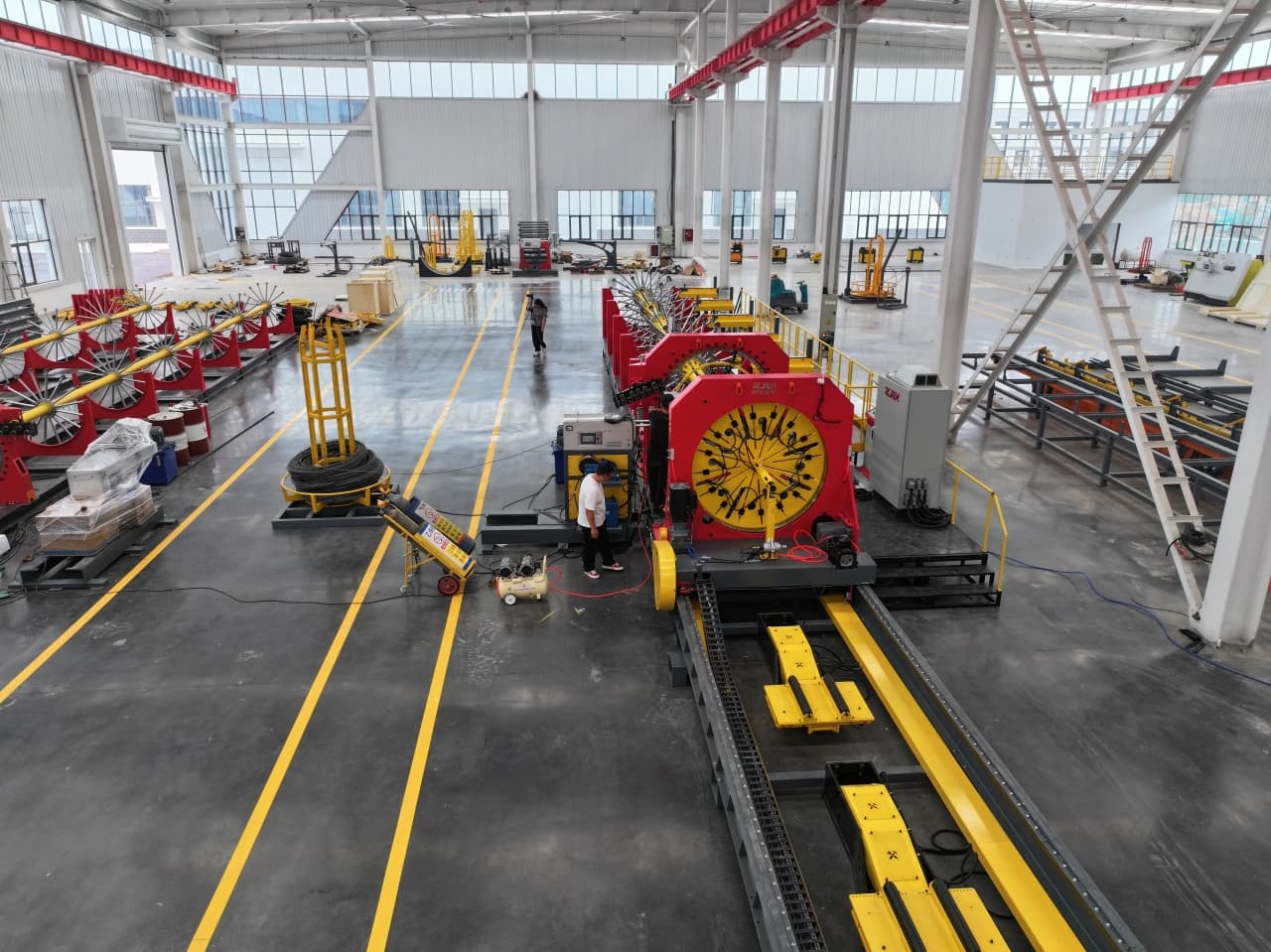
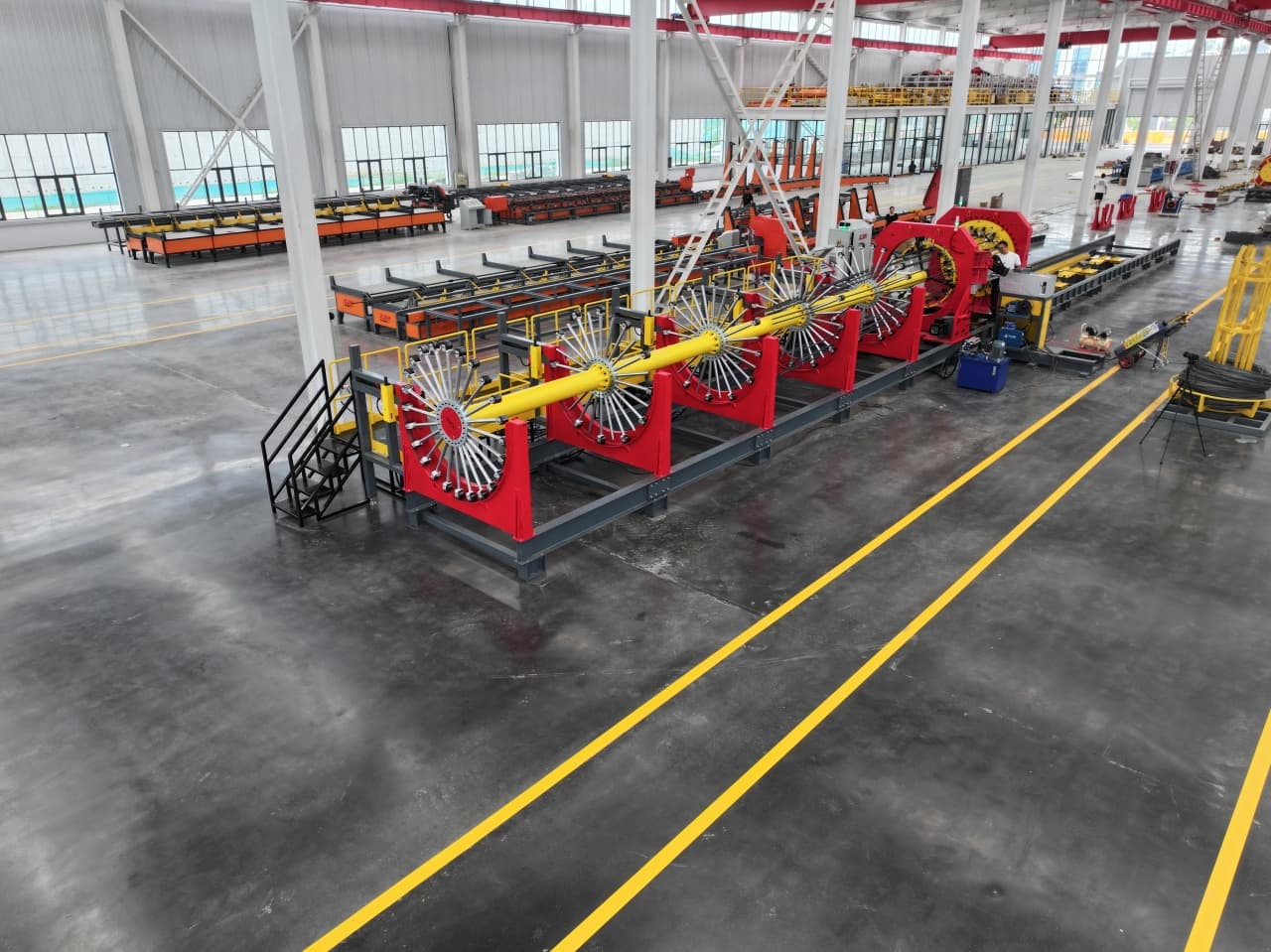
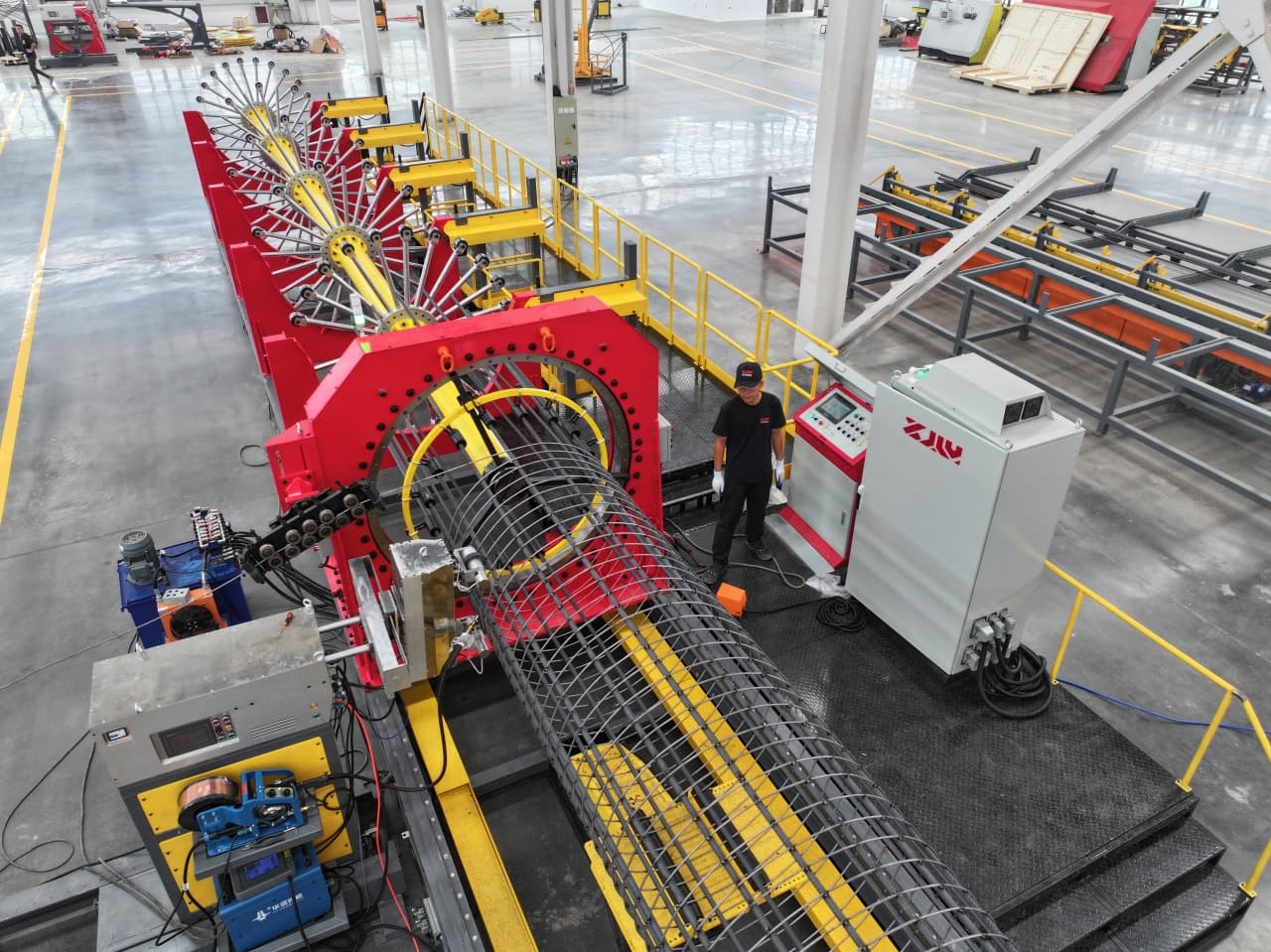
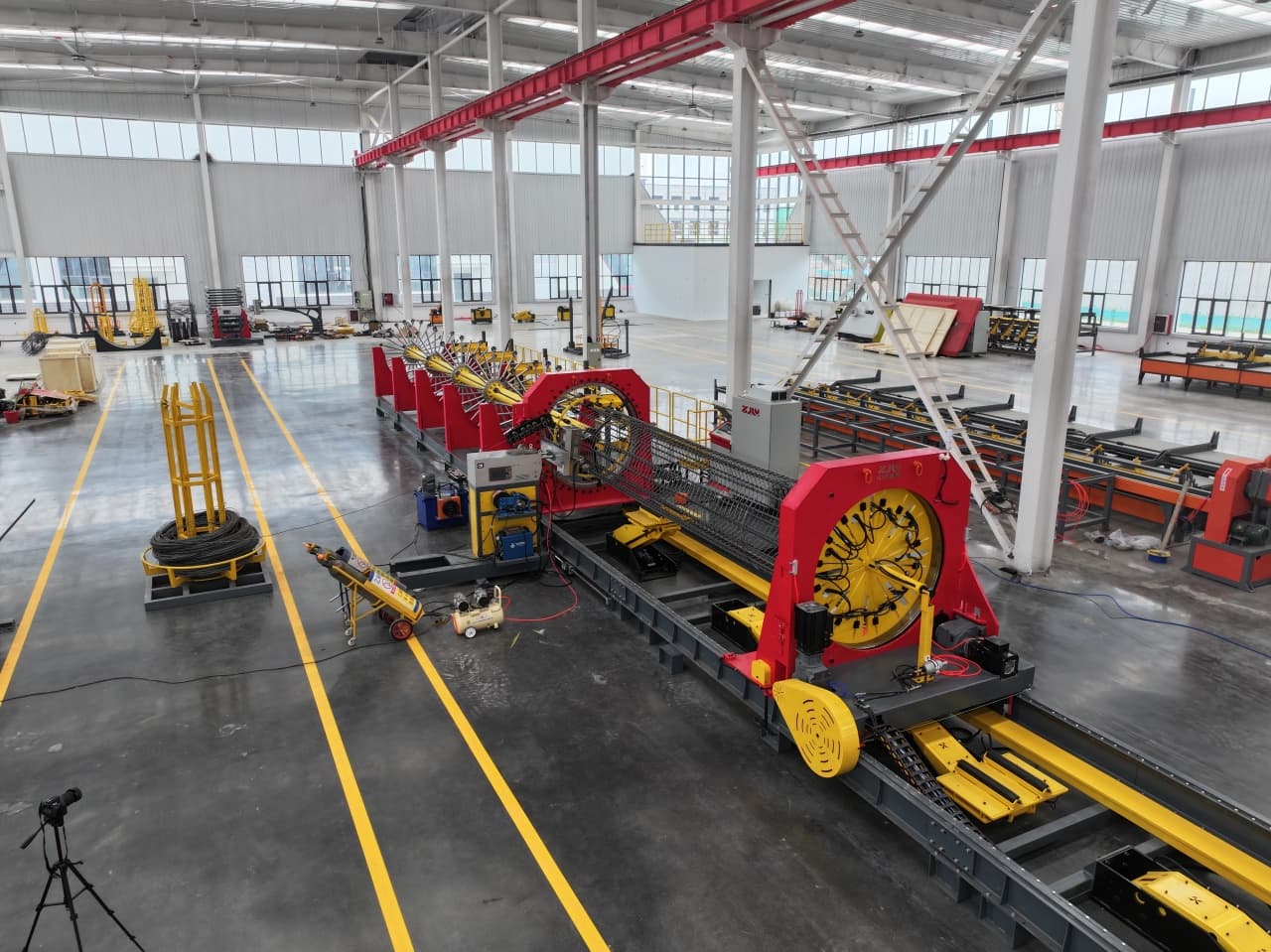
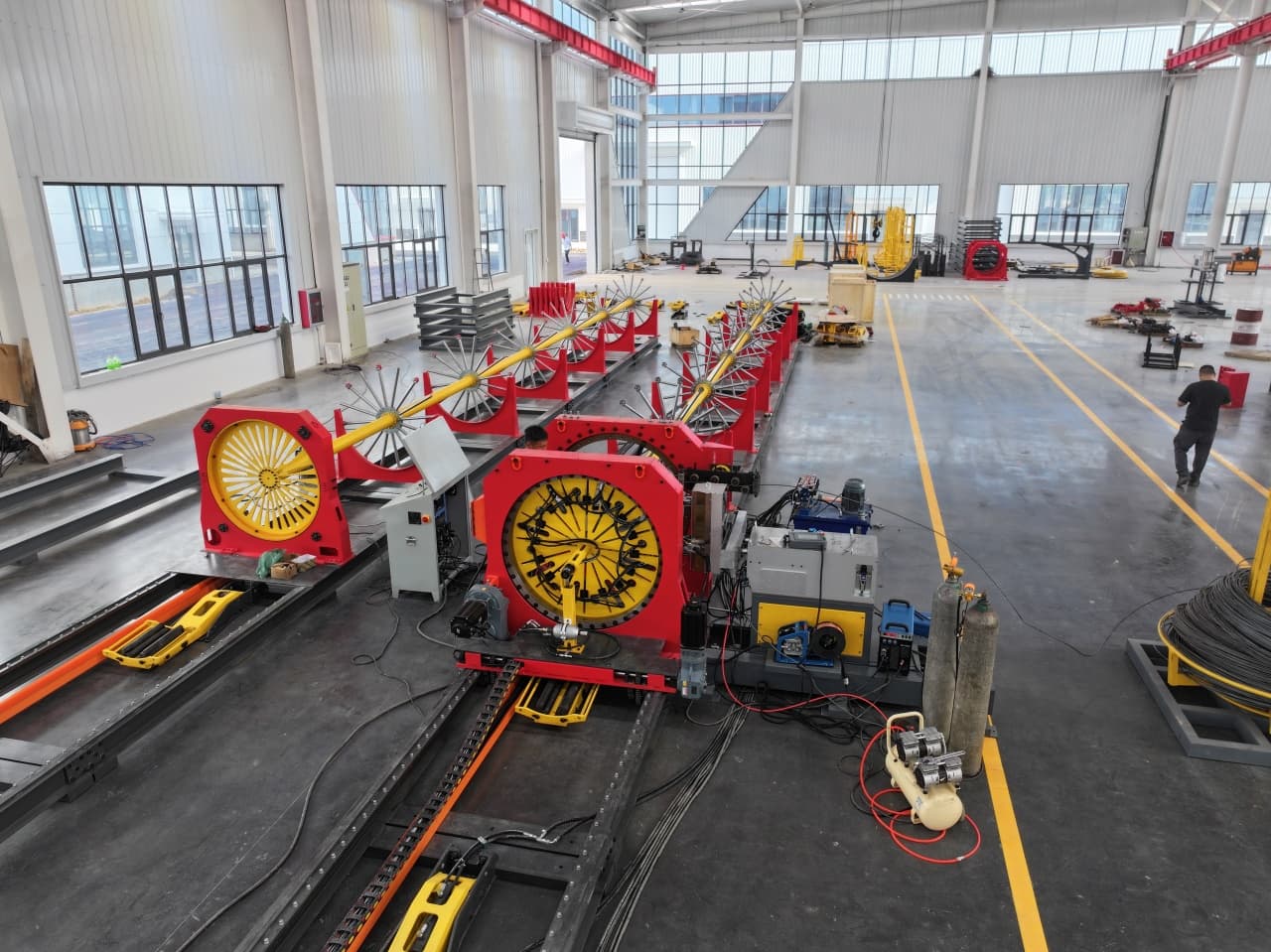
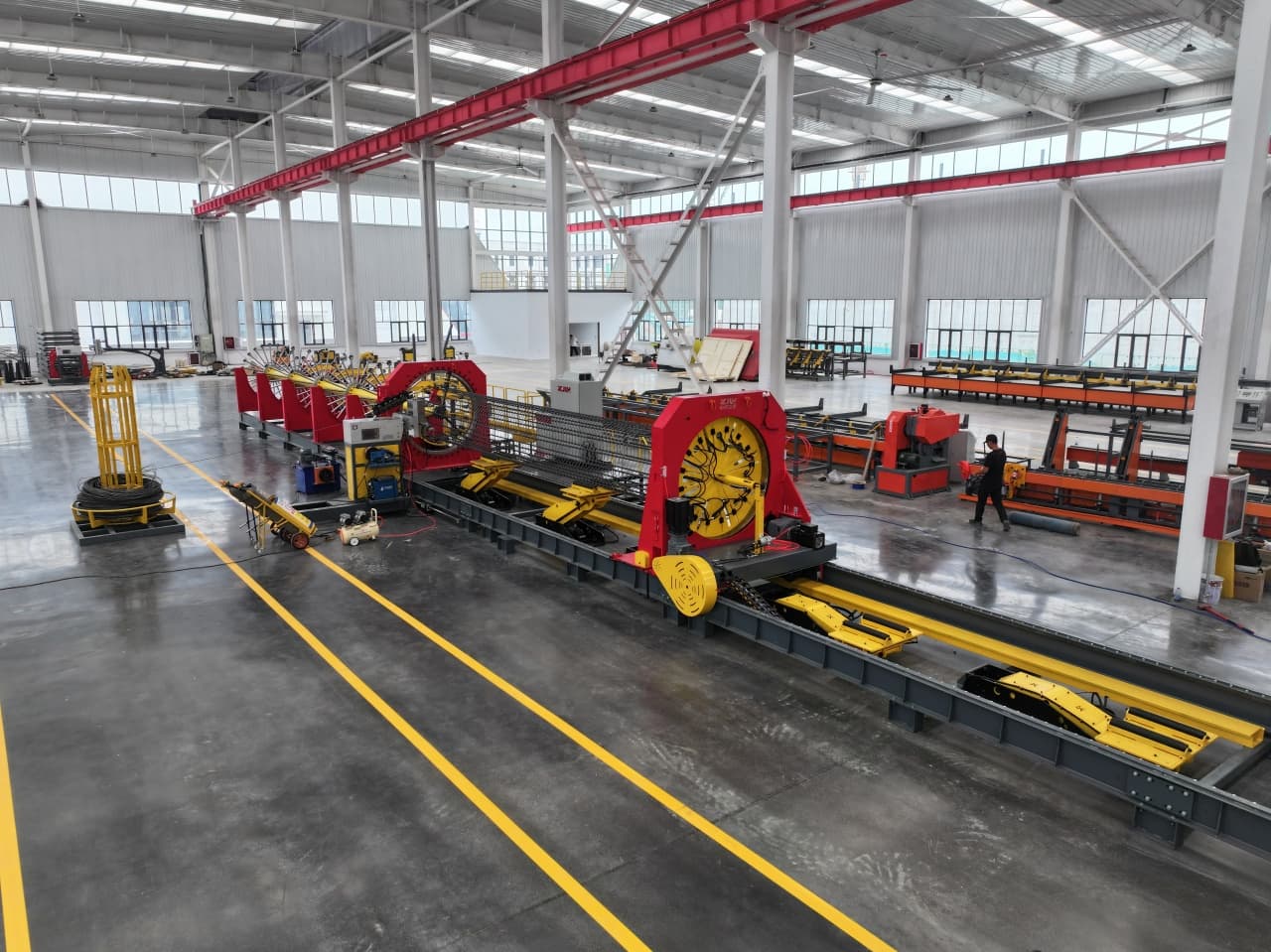
The Best Reinforcement Cage Machine for Piling Projects integrates mechanical engineering, CNC control systems, automatic welding technology, and precision material feeding systems. The machine is mainly composed of several functional units, including the main rotating cage frame, longitudinal bar feeding system, spiral wire winding system, welding mechanism, hydraulic positioning system, and intelligent control cabinet.
In modern infrastructure development, deep foundation systems play a critical role in supporting bridges, high-rise buildings, ports, highways, and large-scale industrial facilities. Among the essential technologies used in foundation construction, reinforcement cage manufacturing has become a key factor influencing project efficiency, structural reliability, and overall construction costs. Selecting the Best Reinforcement Cage Machine for Piling Projects allows contractors, piling specialists, and engineering companies to achieve higher productivity, improved welding quality, and consistent reinforcement cage accuracy.
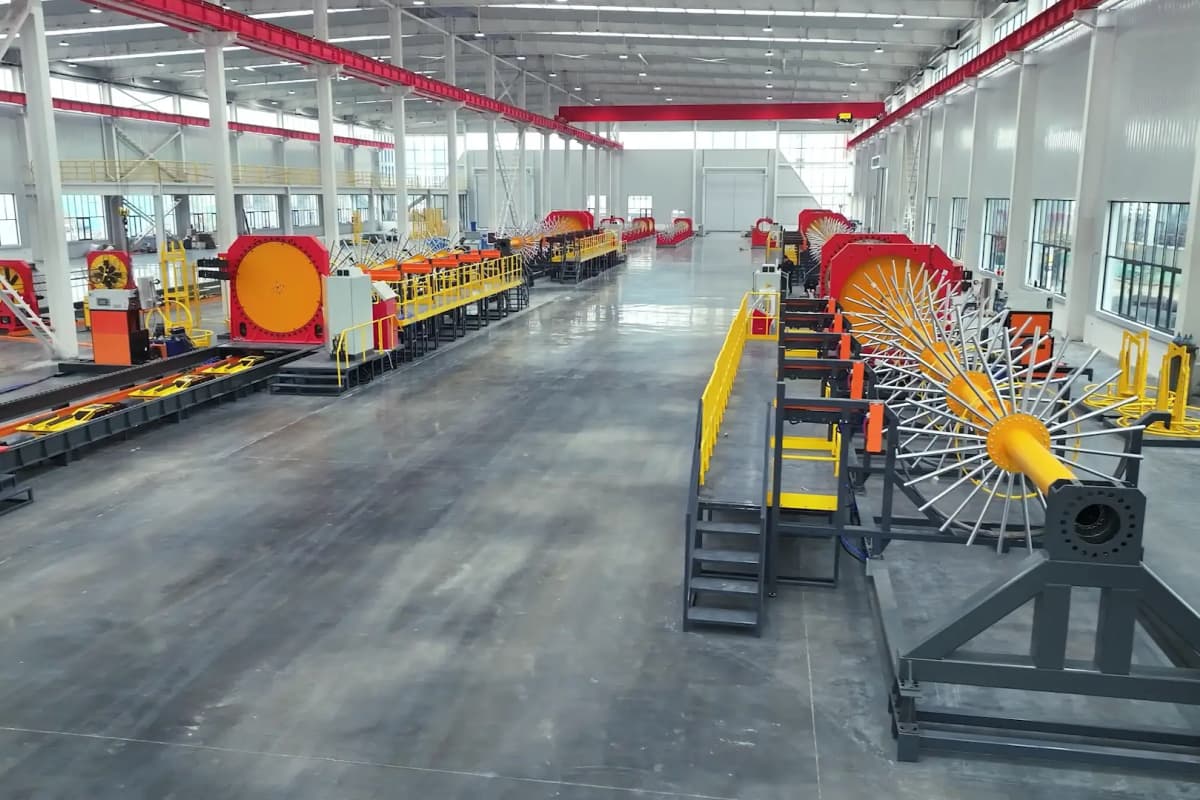
A reinforcement cage machine is designed to automate the production of steel reinforcement cages used in bored piles, drilled shafts, and other foundation structures. Compared with traditional manual fabrication methods, advanced automatic reinforcement cage machines significantly reduce labor requirements, minimize production errors, and provide stable cage dimensions. For international buyers seeking reliable construction equipment, choosing the right machine supplier is essential to ensuring long-term operational performance and return on investment.
Advanced Technology Behind Reinforcement Cage Manufacturing
The Best Reinforcement Cage Machine for Piling Projects integrates mechanical engineering, CNC control systems, automatic welding technology, and precision material feeding systems. The machine is mainly composed of several functional units, including the main rotating cage frame, longitudinal bar feeding system, spiral wire winding system, welding mechanism, hydraulic positioning system, and intelligent control cabinet.
The CNC control system is one of the most important components of modern reinforcement cage equipment. Through programmable parameters, operators can accurately control cage diameter, pitch spacing, welding speed, and production length. This digital control capability allows contractors to manufacture reinforcement cages with different specifications without extensive manual adjustment.
A typical automatic reinforcement cage machine can process steel bars ranging from approximately 12 mm to 40 mm in diameter, depending on the model configuration. Cage diameters commonly vary from 300 mm to more than 3000 mm, while production lengths can be customized according to project requirements. Advanced models can achieve high-speed continuous production, improving efficiency for large-scale piling projects.
The welding system is another key advantage. Traditional cage fabrication often relies on manual welding, which can result in inconsistent weld quality and higher labor costs. Modern equipment uses automatic resistance welding or integrated welding systems to ensure uniform connection points, strong structural performance, and reduced dependence on skilled workers.
Product Structure and Engineering Design
The structure of a reinforcement cage machine is designed to meet the demanding requirements of construction environments. The main frame is manufactured using high-strength steel materials to provide stability during continuous operation. A rigid machine structure helps maintain cage roundness and prevents deformation during the manufacturing process.
The rotating system controls the movement of the reinforcement cage during production. With precise speed regulation, the machine can maintain consistent spiral reinforcement spacing, which is essential for pile strength and load-bearing performance.
The longitudinal reinforcement feeding system automatically delivers steel bars into the designated position. This reduces manual handling and improves production efficiency. For large diameter pile cages, automated feeding systems are especially valuable because they reduce workplace risks and improve operational safety.
The spiral reinforcement winding unit is responsible for forming the continuous spiral steel structure around the main reinforcement bars. Through adjustable parameters, operators can easily modify spiral spacing according to engineering specifications. This flexibility makes the equipment suitable for different foundation designs and geological conditions.
The electrical control system usually includes a PLC controller, touchscreen interface, servo motors, and safety monitoring functions. These components allow operators to monitor production status, adjust parameters, and diagnose potential issues quickly.
Manufacturing Process and Production Advantages
The manufacturing process of reinforcement cages directly affects the quality and efficiency of piling projects. With an automatic reinforcement cage production line, the entire workflow becomes more standardized and controlled.
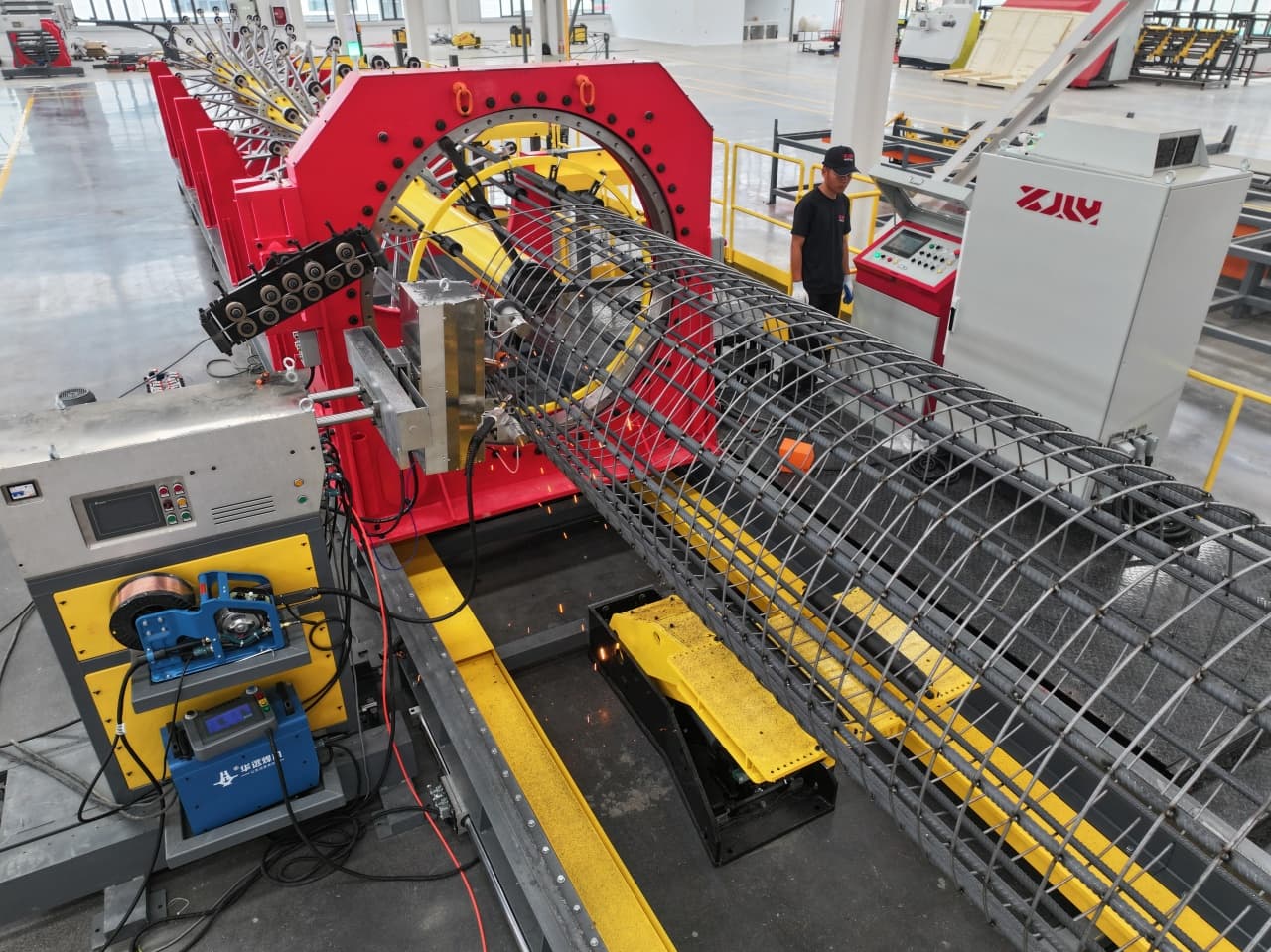
First, steel reinforcement bars are prepared according to engineering drawings. The bars are then positioned through the automatic feeding system. The machine rotates the cage structure while welding the spiral reinforcement wire onto the longitudinal bars at precisely controlled intervals.
During the welding stage, the system maintains stable electrical parameters and mechanical pressure to achieve strong and consistent welding points. After completing the required cage length, the finished reinforcement cage is removed and prepared for transportation to the construction site.
Compared with manual fabrication, an automated system offers several advantages. Production speed can be increased significantly, especially for projects requiring hundreds or thousands of reinforcement cages. Labor requirements are reduced, allowing construction companies to allocate workers to other critical tasks. In addition, automated production improves dimensional accuracy, reducing problems during pile installation.
For contractors working on large infrastructure projects, the Best Reinforcement Cage Machine for Piling Projects provides a practical solution for achieving higher output while maintaining strict engineering standards.
Applications in Global Piling Projects
Reinforcement cage machines are widely used in various construction applications worldwide. In highway and railway bridge projects, reinforcement cages are essential components of deep foundation piles that support heavy structural loads. The ability to produce large quantities of consistent cages helps contractors maintain project schedules.
In urban construction, where space and construction time are limited, automatic reinforcement cage machines provide significant advantages. High-rise buildings often require deep foundation systems with precise reinforcement structures. Automated cage production ensures that each pile meets engineering requirements.
Marine construction projects, including ports, offshore structures, and coastal facilities, also depend on high-quality reinforcement cages. These environments require strong foundations capable of resisting complex forces such as waves, corrosion, and heavy loads.
Other applications include subway construction, wind power foundation projects, industrial plants, and large-scale commercial developments. Due to its flexibility and efficiency, the reinforcement cage machine has become an important investment for international construction companies.
What International Buyers Consider When Purchasing
Global buyers evaluating reinforcement cage equipment usually focus on several key factors, including machine reliability, production capacity, technical support, and total ownership cost.
One major concern is production efficiency. Contractors need equipment that can handle demanding project schedules while maintaining stable output. A machine with automatic operation, fast welding speed, and simple parameter adjustment can significantly improve project profitability.
Another important factor is durability. Construction environments are often challenging, involving dust, vibration, and long working hours. International buyers prefer machines manufactured with high-quality components, robust structures, and proven industrial designs.
After-sales service is also a critical purchasing consideration. Buyers from Europe, North America, Southeast Asia, and the Middle East often require remote technical support, spare parts availability, installation guidance, and operator training. A professional supplier should provide complete technical documentation and long-term service solutions.
Energy consumption and operating costs are additional concerns. Modern buyers increasingly prefer energy-efficient machines that reduce electricity usage while maintaining high production performance. Intelligent control systems and optimized welding technology help reduce unnecessary operational expenses.
Choosing the Right Supplier for Long-Term Success
Selecting the Best Reinforcement Cage Machine for Piling Projects requires more than comparing equipment prices. Buyers should evaluate the manufacturer’s engineering capability, production experience, quality control procedures, and international export experience.
A professional manufacturer should provide customized solutions based on different project requirements. Factors such as cage diameter, steel bar specifications, production volume, and site conditions should be considered before selecting the appropriate machine model.
For companies involved in large-scale piling construction, investing in a reliable automatic reinforcement cage machine can create long-term benefits. Higher production efficiency, improved quality consistency, and reduced labor dependency contribute directly to better project performance.
As global infrastructure development continues to expand, demand for advanced reinforcement cage manufacturing technology will continue increasing. Contractors and engineering companies that adopt automated production equipment can gain stronger competitiveness in the international construction market.
Frequently Asked Questions
1. What is the production capacity of an automatic reinforcement cage machine?
The production capacity depends on machine configuration, cage specifications, welding method, and operating conditions. Advanced models can continuously produce multiple reinforcement cages per day, making them suitable for large piling projects.
2. Can reinforcement cage machines produce different cage diameters and lengths?
Yes. Most modern machines support adjustable parameters, allowing manufacturers to produce reinforcement cages with different diameters, lengths, and spiral spacing according to construction requirements.
3. What are the advantages of using an automatic reinforcement cage welding machine compared with manual fabrication?
Automatic equipment improves welding consistency, increases production speed, reduces labor costs, and provides better dimensional accuracy compared with traditional manual methods.
4. How can international buyers select a reliable reinforcement cage machine supplier?
Buyers should consider manufacturing experience, technical support capability, machine quality, customization options, and previous export projects before making a purchasing decision.
For professional recommendations, technical specifications, and customized solutions for your piling projects, contact an experienced reinforcement cage machine manufacturer to request detailed equipment information, project references, and a competitive quotation.