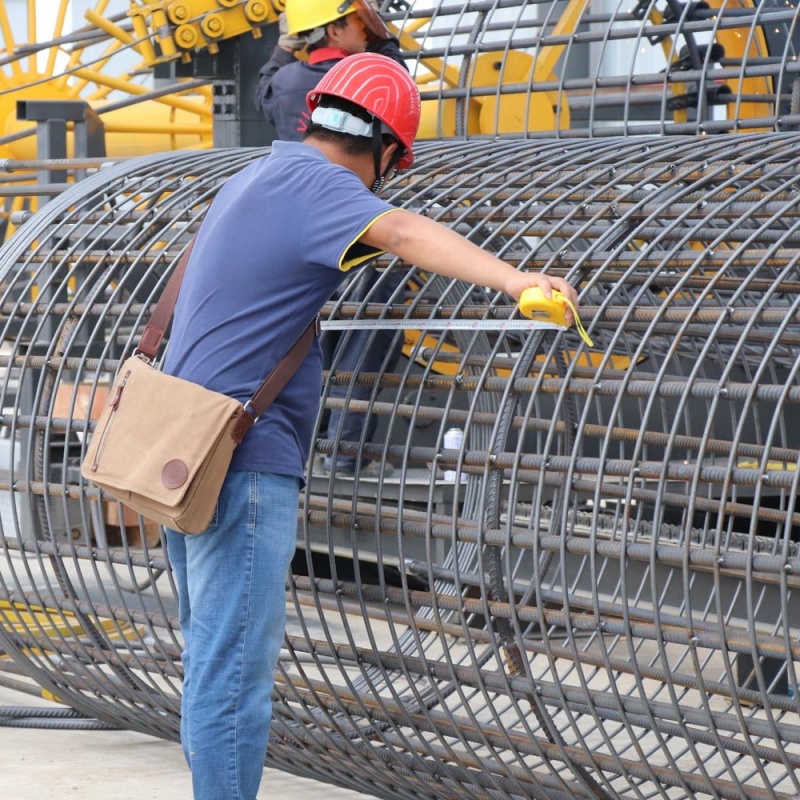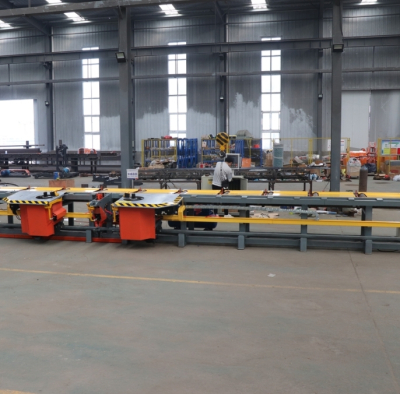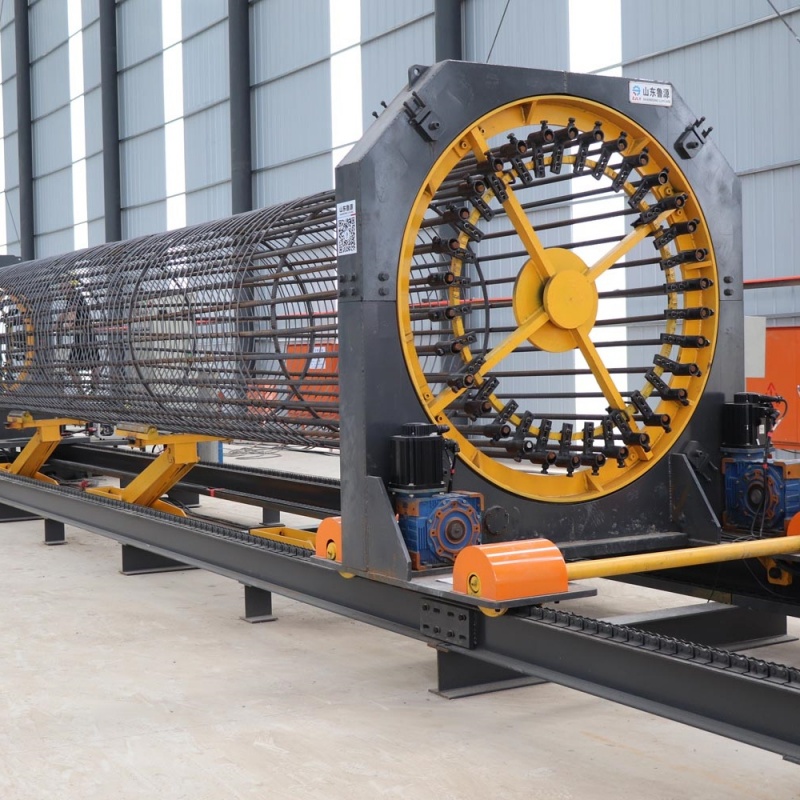
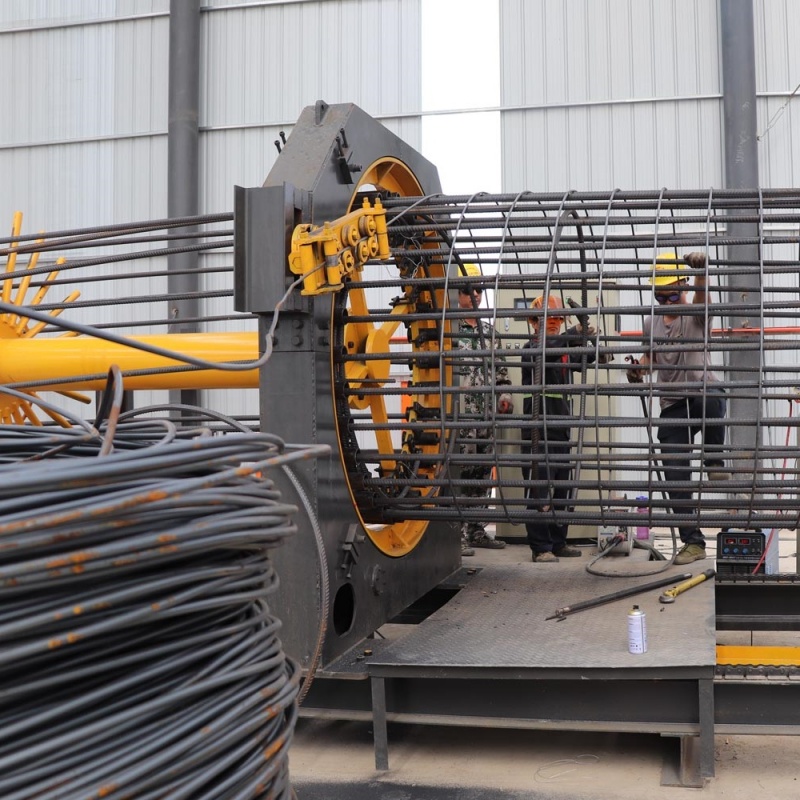
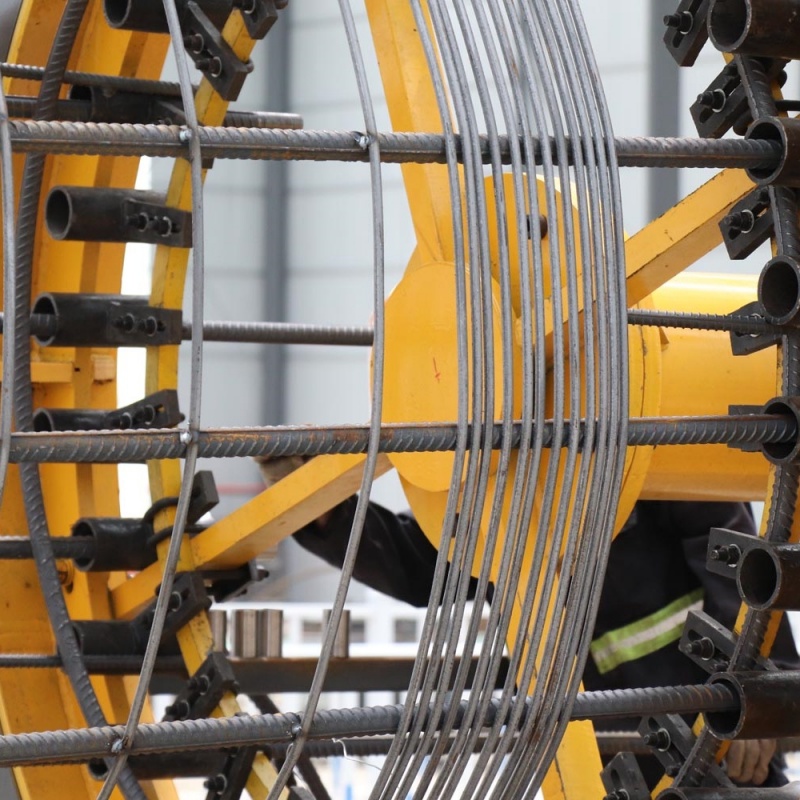
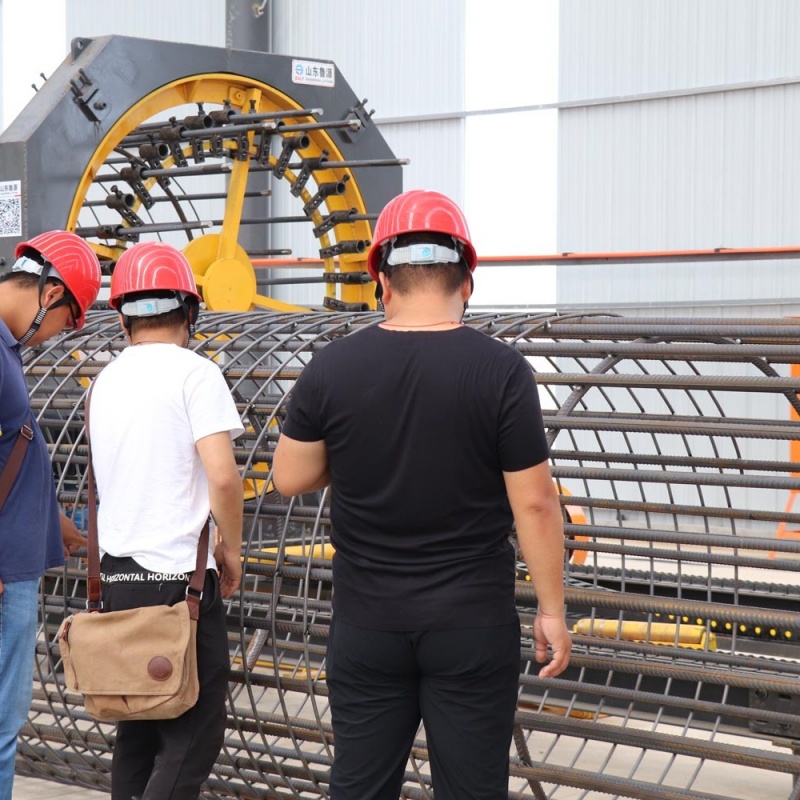
The steel cage rolling welder has become a standard equipment in high-speed railway bridges
Efficiency Leap: The traditional process requires 4-6 workers per shift, with a daily output of 6-8 steel cage sections. In contrast, intelligent equipment only needs 1 worker per shift, and dual-station models can achieve a daily output of 20-24 sections of 12-meter-long steel cages, increasing efficiency by 3-4 times.
Controllable Quality: Mechanized operation ensures uniform spacing and consistent diameter of main bars, and the welding strength meets specifications. The frequency of supervision sampling is significantly reduced, and the docking error of steel cages is nearly zero.
Cost Optimization: Stirrups do not require overlapping, reducing material waste by 1%-1.5%. Labor costs are saved by 3/4, resulting in significant long-term economic benefits.
Strong Adaptability: It can process steel cages for pile foundations with a diameter of 800-2500mm and a length of 12-30m. It is compatible with main bars of 16-32mm in diameter and stirrups of 6-16mm in diameter, without the need for frequent mold replacement.
Support and Drive System: Comprising a fixed rotation drive system, a movable rotation drive system, and a traction guide rail. Driven by a servo motor and a reducer, it ensures the synchronous rotation and movement accuracy of the double discs, serving as the power core for the equipment's operation.
Steel Bar Processing System: Covering a main bar material rack, a stirrup pay-off rack, and a stirrup straightening mechanism. The main bar material rack can store steel bars of 2-27 meters, the pay-off rack has a maximum load capacity of 2 tons, and the straightening mechanism ensures the flatness of stirrup winding.
Positioning and Clamping System: Realizes the uniform circumferential distribution of main bars through main bar conduits, fixators, and a receiving and separating system. The clamping bolts can effectively fix the steel bars to prevent displacement during processing.
Welding and Forming System: Equipped with a carbon dioxide shielded welding device and a 6-axis manipulator, it can automatically complete the welding of the intersection points between main bars and stirrups. Some high-end models can achieve double-main-bar and double-stirrup welding.
Control System: Adopting an ABB frequency converter, an imported Japanese PLC, and a touch screen. It allows real-time setting of parameters such as stirrup spacing (50-300mm) and welding speed, with the pitch error controlled within ±5mm.
Auxiliary Support System: 5 sets of hydraulic support devices automatically lift and lower according to the length of the steel cage, preventing bending deformation caused by self-weight and ensuring forming accuracy.

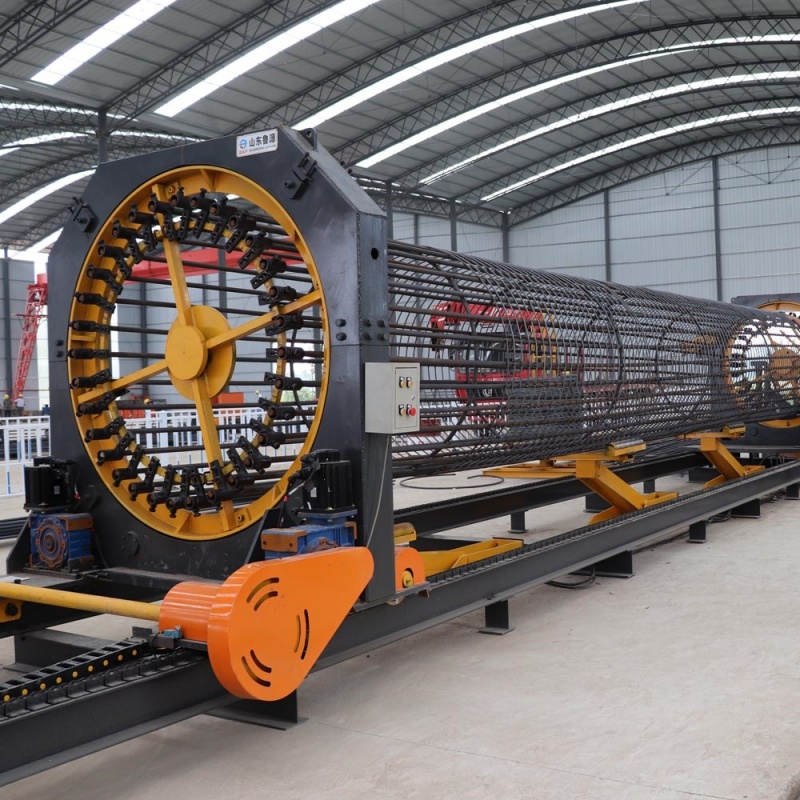
Raw Material Preparation: After cutting and butt welding, the main bars are hoisted to the main bar material rack; the coiled bars are hoisted to the pay-off rack; and the internal reinforcement bars are pre-formed by an arc bending machine (with a diameter of 300-2500mm).
Main Bar Feeding and Fixing: Manually thread the main bars into the conduits of the fixed disc and movable disc, and clamp them with bolts to ensure the dislocation length of the main bars is approximately 1 meter. The material distributing disc system realizes the uniform distribution of 8 groups of main bars.
Stirrup Preprocessing: After the coiled bars are straightened by the straightening mechanism, their ends are welded and fixed to one main bar to prepare for winding.
Initial Welding: The double discs rotate synchronously, and the coiled bars are wound side by side for 3-5 turns and welded firmly to establish the initial forming foundation.
Main Body Forming: The movable disc rotates while moving backward at a constant speed. The stirrups are automatically spirally wound around the main bars, and the welding manipulator synchronously completes the welding of intersection points. The hydraulic supports are lifted in groups as the steel cage extends.
Termination Processing: When the set length is reached, welding is paused. The coiled bars are wound side by side for finishing and fixed, and then the stirrups are cut off.
Demolding and Separation: The movable disc moves forward to separate from the steel cage, and the conduit bolts are loosened to complete the separation from the double discs.
Cage Unloading and Transfer: The steel cage is lifted away from the equipment by a crane, and the hydraulic supports are lowered and reset.
Internal Bar Installation: Manually spot-weld the prefabricated reinforcement bars inside the steel cage to enhance overall rigidity.
Equipment Reset: The movable disc returns to its initial position to prepare for the next production cycle. The entire process can be controlled with one click via the touch screen.

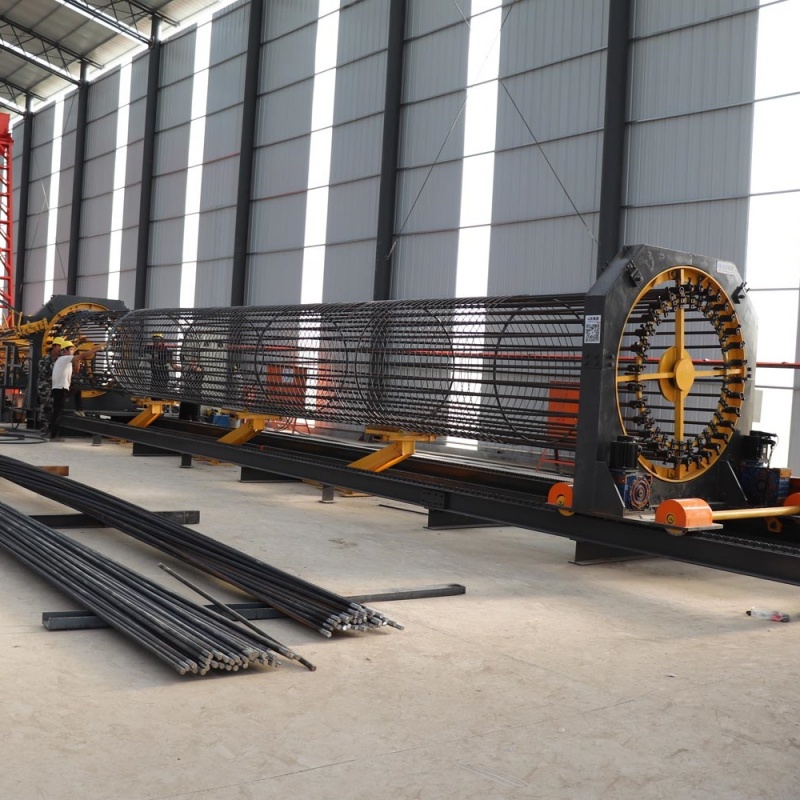
Efficiency Leap: The traditional process requires 4-6 workers per shift, with a daily output of 6-8 steel cage sections. In contrast, intelligent equipment only needs 1 worker per shift, and dual-station models can achieve a daily output of 20-24 sections of 12-meter-long steel cages, increasing efficiency by 3-4 times.
Controllable Quality: Mechanized operation ensures uniform spacing and consistent diameter of main bars, and the welding strength meets specifications. The frequency of supervision sampling is significantly reduced, and the docking error of steel cages is nearly zero.
Cost Optimization: Stirrups do not require overlapping, reducing material waste by 1%-1.5%. Labor costs are saved by 3/4, resulting in significant long-term economic benefits.
Strong Adaptability: It can process steel cages for pile foundations with a diameter of 800-2500mm and a length of 12-30m. It is compatible with main bars of 16-32mm in diameter and stirrups of 6-16mm in diameter, without the need for frequent mold replacement.