What is a Pile Cage Welding Machine?
Compared with traditional manual fabrication, a pile cage welding machine shows prominent advantages in quality, efficiency and cost control. Automated welding ensures consistent welding strength and uniform overall dimensions of each cage, effectively avoiding quality risks caused by human factors. The production efficiency is more than three times higher than manual operation, which can greatly accelerate project progress during peak construction periods.
In terms of cost management, automated equipment cuts down labor demand significantly and reduces labor management costs. Precise positioning and fixed-length processing also lower rebar waste. Meanwhile, centralized mechanical operation reduces workers’ exposure to welding fumes and high-risk operations, improving overall on-site safety management level.
Product Details
Reinforced concrete piles are the foundational backbone of high-rise buildings, bridges, viaducts and large-scale infrastructure projects worldwide. The pile cage, also known as foundation rebar cage, serves as the critical reinforcement component that enhances the load-bearing capacity and structural durability of cast-in-place piles. Traditional manual fabrication of pile cages relies on manual binding and scattered welding, which suffers from low productivity, inconsistent structural accuracy, high labor costs and potential safety hazards. A pile cage welding machine is a dedicated automated fabrication device engineered to streamline the production of standard and customized foundation rebar cages.
Integrating mechanical transmission, resistance welding and intelligent control technology, this equipment has become standard configuration for professional rebar processing plants and large construction contractors. This article comprehensively defines the pile cage welding machine, elaborates on its internal structure, core technical parameters, complete operating procedures and practical application scenarios. It also clarifies the value of automated cage fabrication for modern construction projects, delivering professional reference for equipment procurement, technical evaluation and production layout.
Core Structure of a Pile Cage Welding Machine
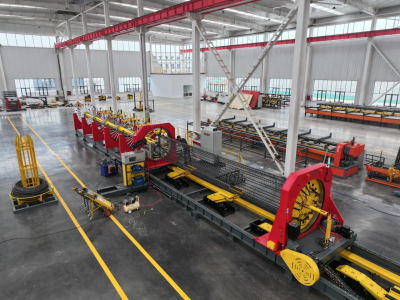
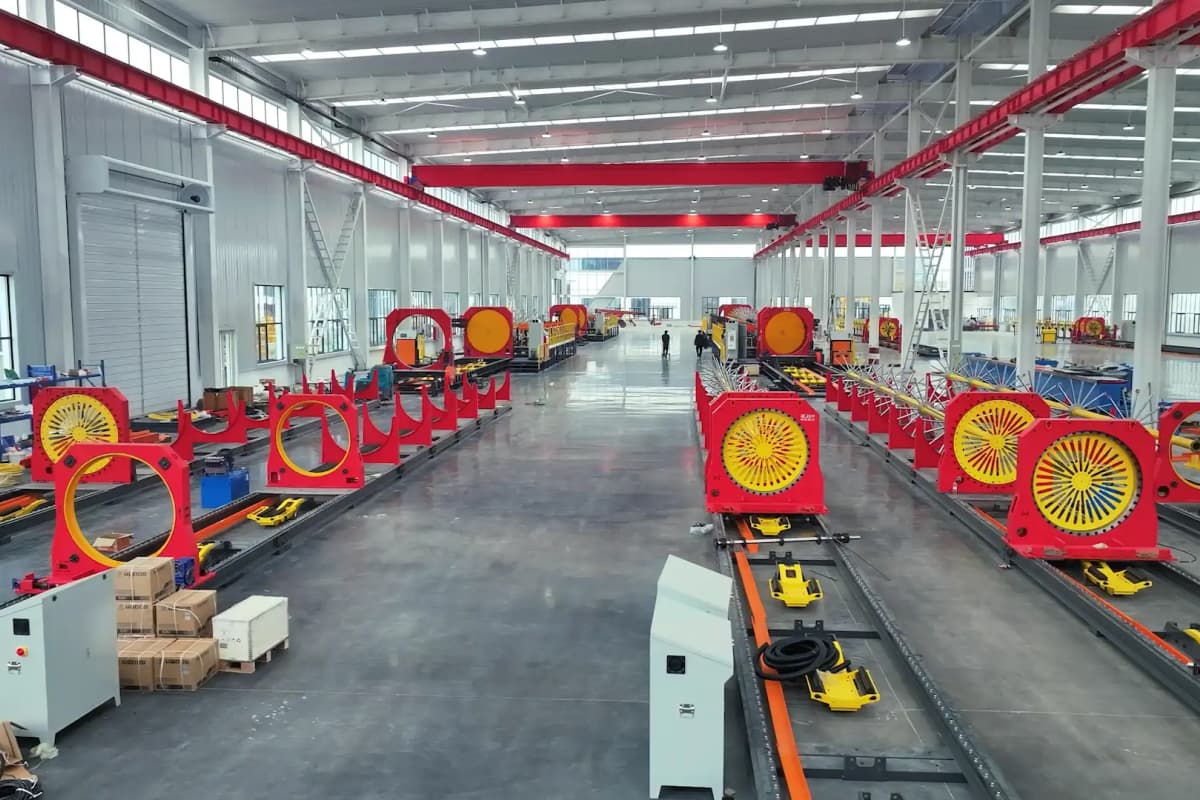
A standard pile cage welding machine adopts a modular integrated design. All functional units coordinate closely to complete rebar positioning, rotating winding, automatic welding and finished product output. Its robust mechanical structure ensures stable long-duration operation under high-load working conditions. The main components are divided into five core modules as follows.
Main Frame and Rotating Disc Assembly
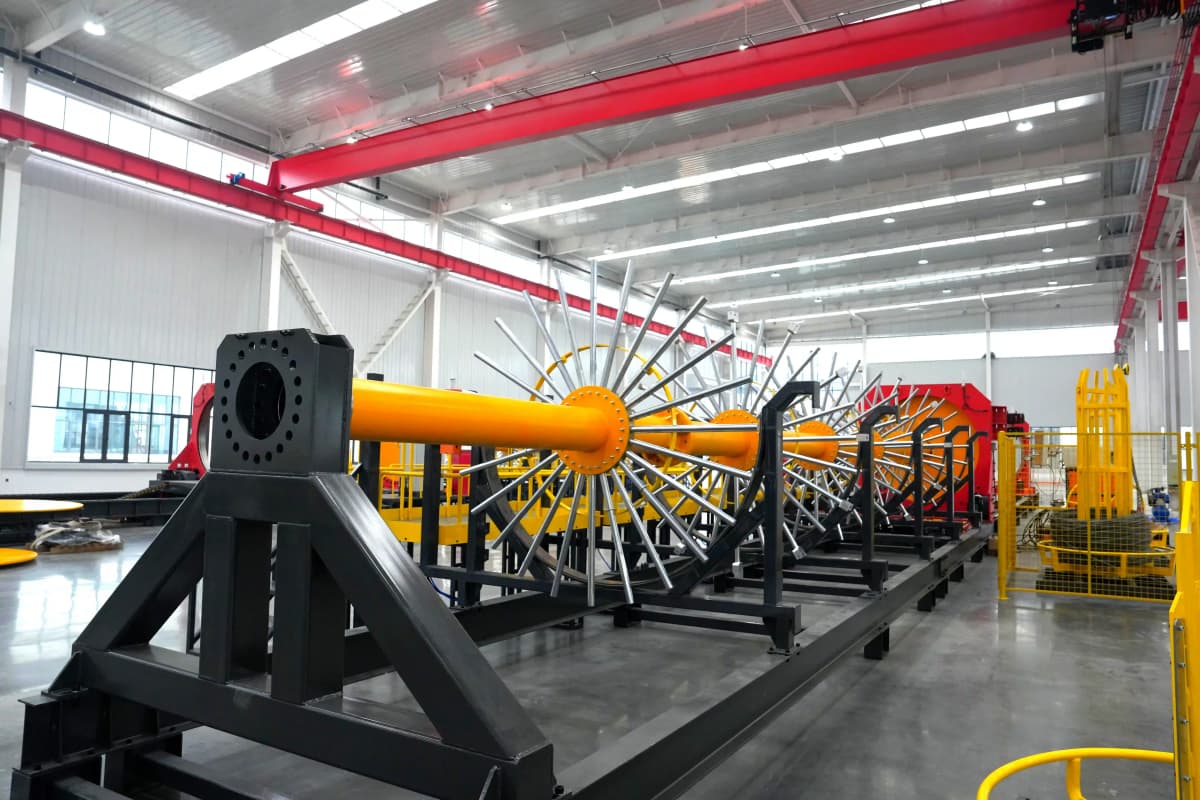
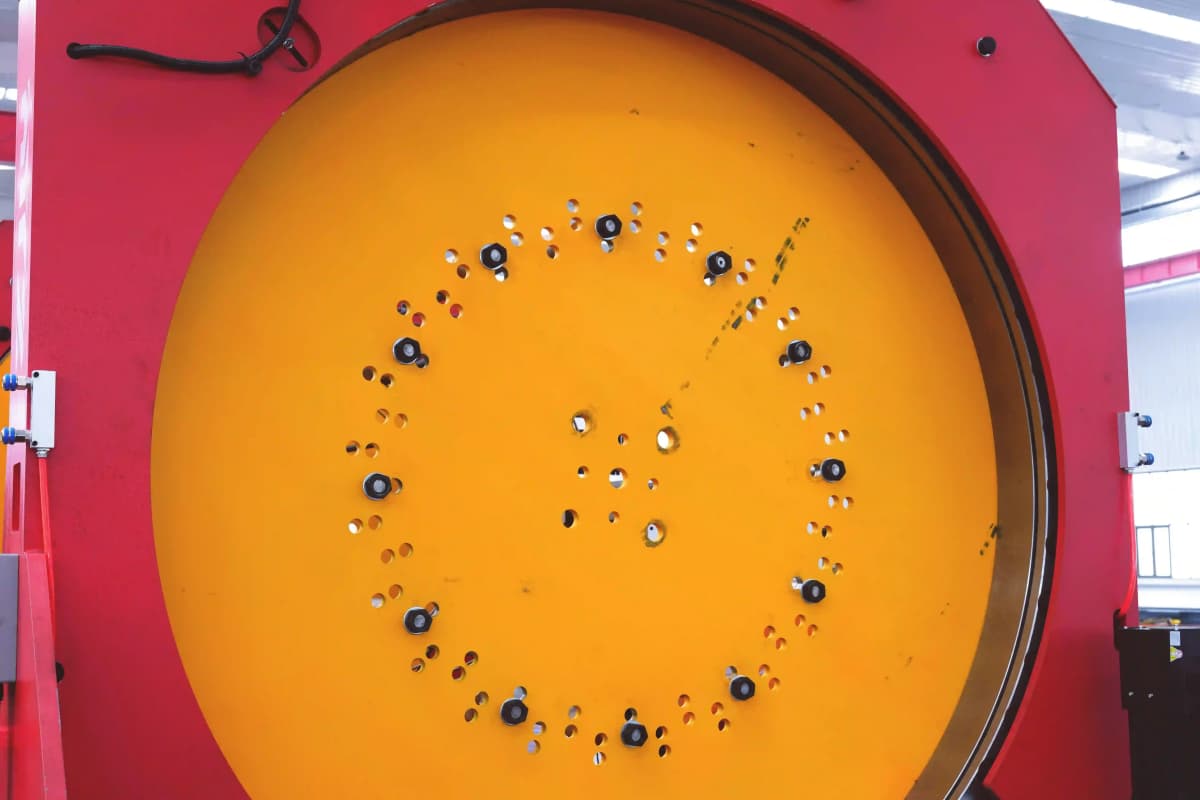
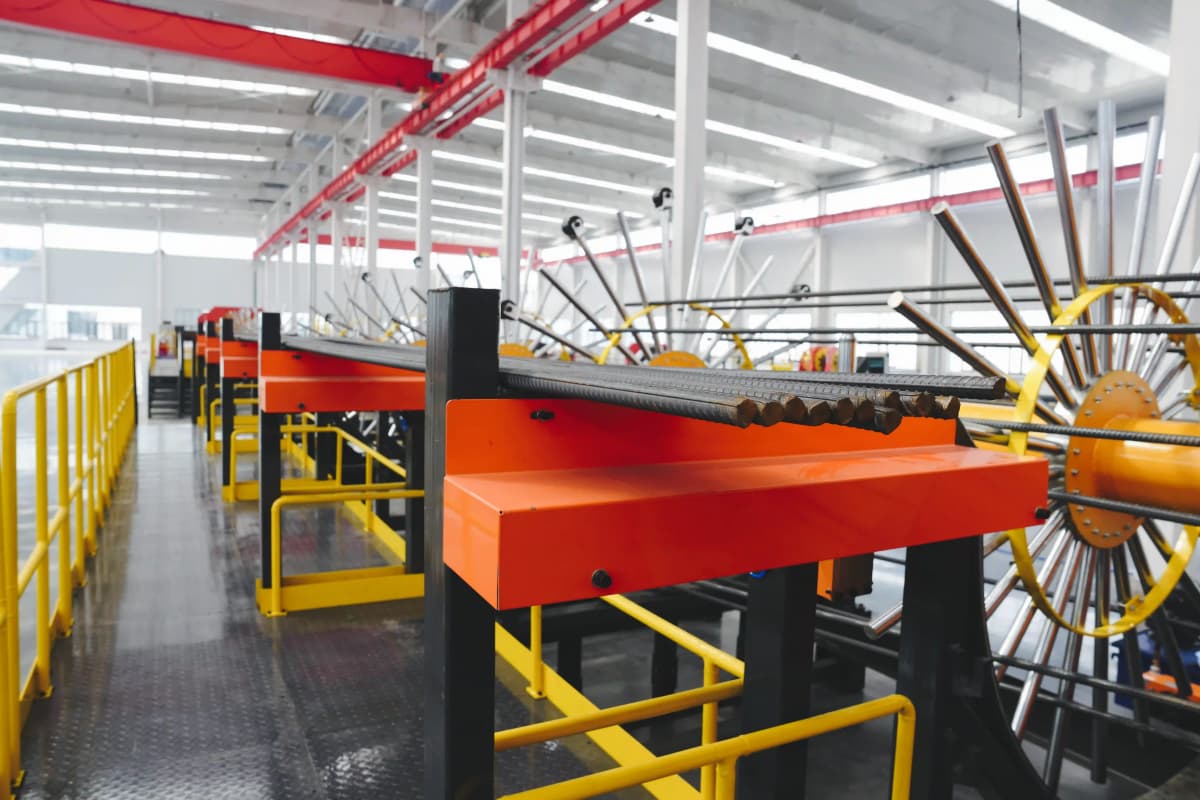
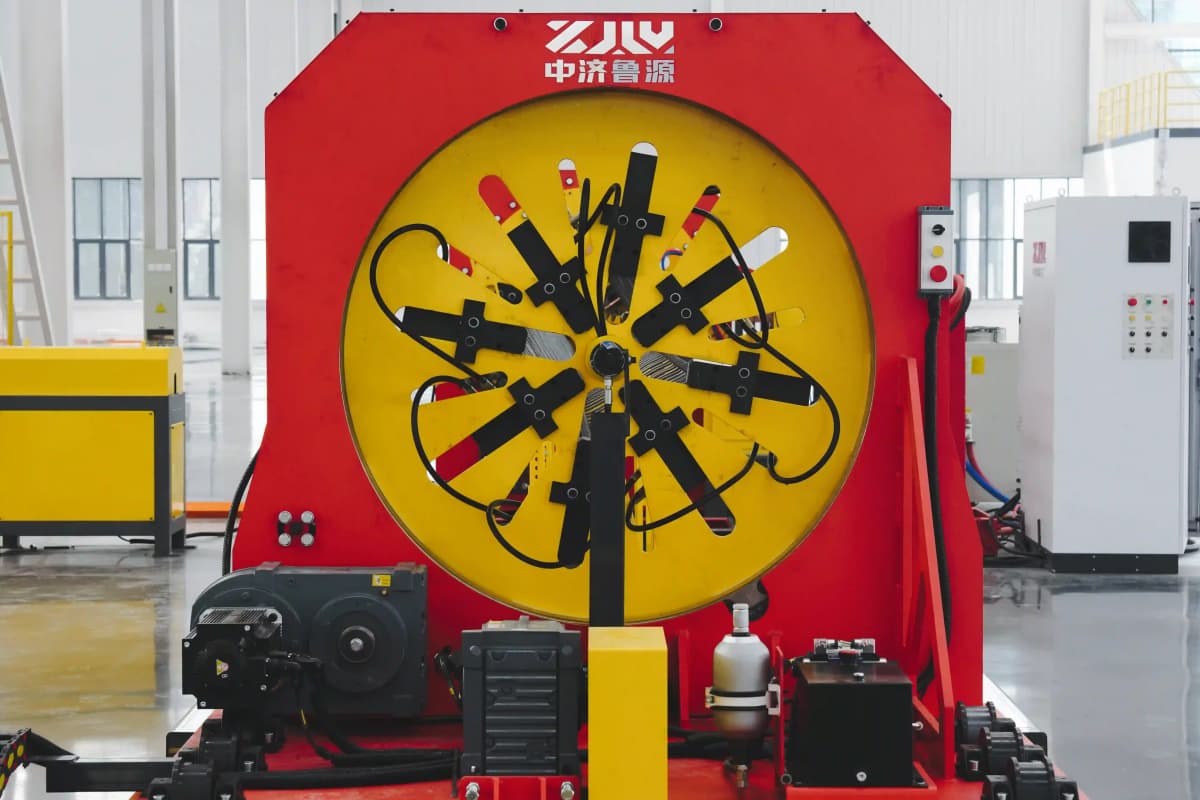
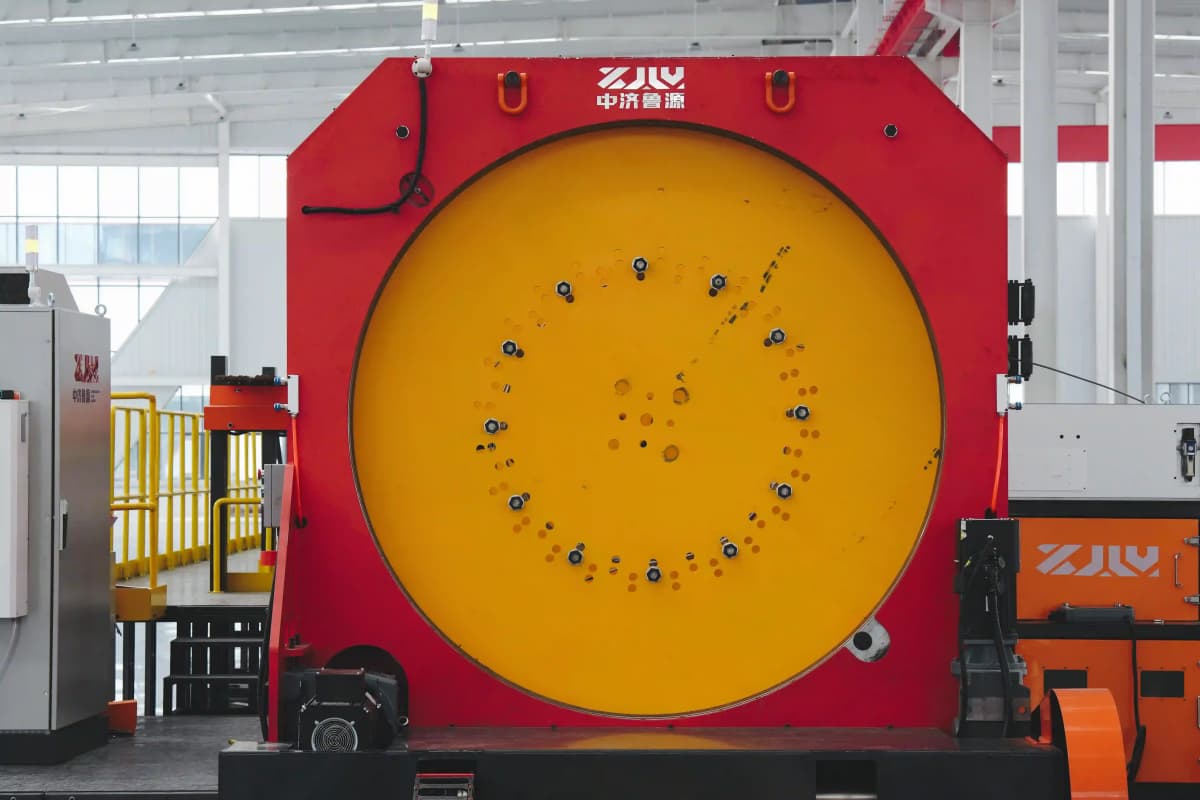
The main frame is fabricated with thickened welded steel plates and undergoes stress relief treatment, effectively resisting vibration and mechanical deformation during continuous rotation. Two sets of rotating discs, namely fixed disc and movable disc, are installed on the frame and driven by synchronous transmission systems. Positioning fixtures on the discs fix longitudinal main rebars at preset intervals. The movable disc slides along precision linear guide rails, and its travel distance directly determines the total length of finished pile cages. This dual-disc synchronous rotating structure is the fundamental guarantee for forming cylindrical pile cages with uniform roundness.
Automatic Stirrup Feeding and Straightening Unit
Coiled stirrup wire is stored on the material rack of the automatic pile cage welding machine, which is equipped with multi-roller straightening mechanisms. Before winding, bent or twisted stirrup wire is fully calibrated to guarantee uniform spacing between every circular stirrup. The feeding speed is linked with the rotating speed of the main discs, realizing synchronous material supply and cage forming, and avoiding loose or uneven winding caused by asynchronous operation.
Resistance Welding System
The welding system is the core functional part of the pile cage welding machine. It is composed of high-performance welding transformers, copper alloy welding electrodes and pressure adjustment components. The equipment adopts electric resistance welding technology: when stirrups wrap around longitudinal rebars, electrodes apply constant pressure and instant current to weld every intersection point firmly. Welding current and pressure can be adjusted according to rebar diameter, ensuring each welding spot reaches standard tensile strength without burning or material damage.
Intelligent Control System
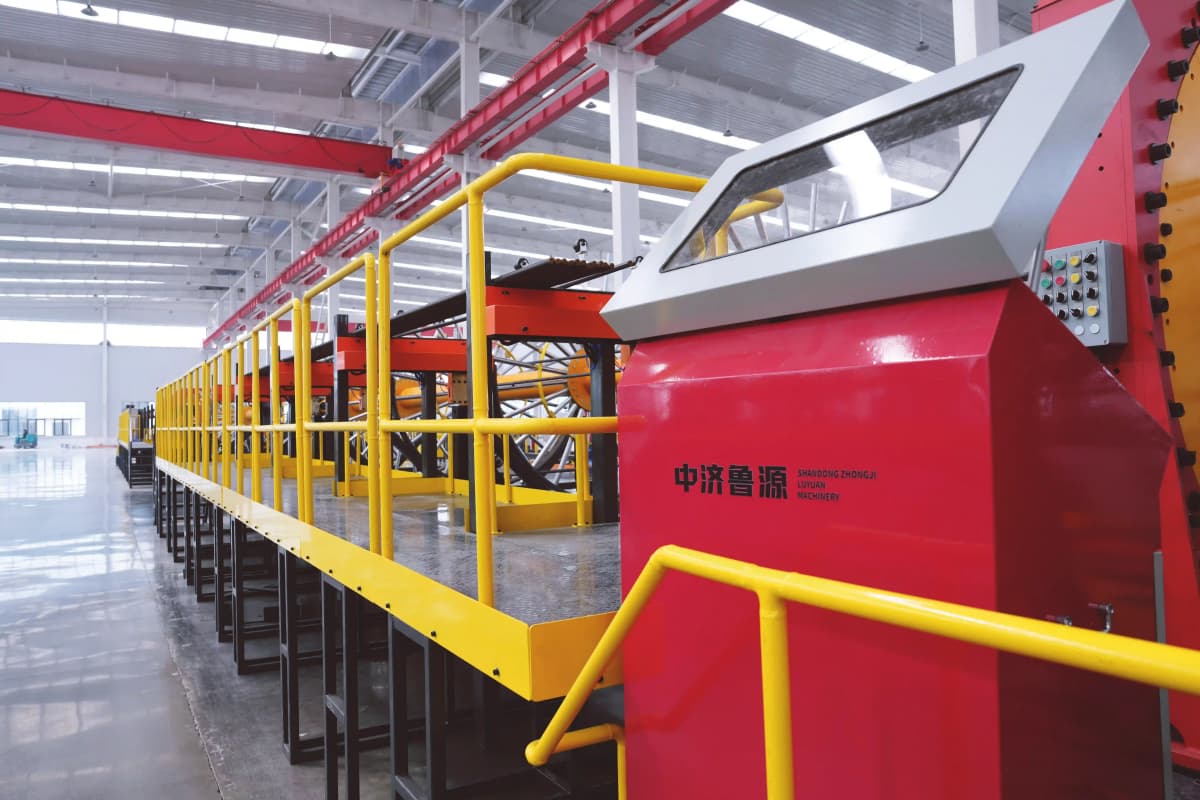
Most modern models are equipped with PLC and touchscreen HMI control panels. Operators can input cage diameter, total length, main bar quantity, stirrup pitch and operating speed on the interface. The system stores dozens of commonly used production templates for one-click switching between different cage specifications. The PLC-controlled pile cage welding machine also features real-time running monitoring, fault alarm and automatic counting functions, greatly reducing manual operation errors and simplifying daily operation.
Auxiliary Support and Safety Devices
For extra-long and large-diameter pile cages, multiple hydraulic support brackets are installed in the middle section of the frame to prevent cage sagging during rotation. Standard safety configurations include emergency stop buttons, protective fences, overload protection and power-off protection devices. These designs comply with international mechanical safety standards and protect operators and equipment during on-site production.
Key Technical Parameters of Pile Cage Welding Machine
Technical parameters directly reflect the working capacity and application range of a pile cage welding machine. Selecting equipment based on project demands is essential to match production efficiency and engineering standards. Below are mainstream technical specifications for industrial-grade models widely used in global construction markets.
The processing range of longitudinal main rebars covers diameters from 12 mm to 40 mm, covering all ordinary threaded rebars for foundation engineering. The applicable stirrup wire diameter ranges from 5 mm to 14 mm, meeting the shear reinforcement requirements of various pile foundations. The adjustable cage diameter spans from 300 mm to 3000 mm, which can satisfy small residential foundation piles and super-large bridge pier piles.
In terms of production size, the maximum customizable cage length reaches 27 meters, covering most on-site production demands. The stirrup spacing is adjustable from 50 mm to 500 mm, fully compliant with different structural design codes. The linear forming speed ranges from 1.5 m/min to 2.8 m/min, balancing production efficiency and welding quality. The total rated power includes driving power and welding power, adapting to standard three-phase industrial power supply in different regions. All dimensional errors of finished cages are controlled within the tolerance range specified by international construction codes.
Working Process of a Pile Cage Welding Machine
The entire production flow of a pile cage welding machine is highly automated, with only simple manual assistance required. The standardized workflow ensures stable product quality and continuous batch production.
First is pre-production preparation and parameter setting. Operators inspect the mechanical structure, circuit and safety devices, then input all production parameters into the control system according to construction drawings. For repetitive orders, operators can directly call saved templates to shorten setup time. This step is vital for standardized production of foundation pile cage fabrication equipment.
Next comes material loading. Pre-cut longitudinal main rebars are sequentially placed into the positioning holes of fixed and movable discs and locked firmly. Coiled stirrup wire is mounted on the pay-off rack, threaded through the straightening unit and connected to the first main rebar to complete pre-welding fixation.
After starting the formal operation, the two rotating discs rotate synchronously, while the movable disc moves backward steadily at a set speed. The straightened stirrup wire is continuously wound around longitudinal rebars, and the welding system completes spot welding at each intersection in real time. The whole process runs continuously without interruption.
When the movable disc travels to the preset position, the equipment automatically cuts off the stirrup wire and completes final welding. The finished pile cage is released, then transported by cranes or conveyors for storage or delivery. The machine resets automatically and gets ready for the next production cycle.
Main Application Scenarios
A pile cage welding machine is specially developed for foundation reinforcement processing, and its application scenarios are highly concentrated in infrastructure and building construction fields.
In civil building projects, it is used to produce pile cages for building foundation piles, supporting high-rise residential buildings, commercial complexes and industrial plants. In transportation infrastructure, the equipment is widely applied to bridge pile foundations, highway subgrade piles and railway engineering, which require large-diameter and high-strength pile cages.
It also plays an important role in municipal engineering, water conservancy projects and port construction. Professional rebar processing factories prefer this automated equipment to realize large-scale, standardized production and provide finished pile cages for multiple construction sites simultaneously. Compared with manual work, the automated rebar cage welding equipment greatly shortens the prefabrication cycle of foundation components.
Advantages of Adopting Pile Cage Welding Machine
Compared with traditional manual fabrication, a pile cage welding machine shows prominent advantages in quality, efficiency and cost control. Automated welding ensures consistent welding strength and uniform overall dimensions of each cage, effectively avoiding quality risks caused by human factors. The production efficiency is more than three times higher than manual operation, which can greatly accelerate project progress during peak construction periods.
In terms of cost management, automated equipment cuts down labor demand significantly and reduces labor management costs. Precise positioning and fixed-length processing also lower rebar waste. Meanwhile, centralized mechanical operation reduces workers’ exposure to welding fumes and high-risk operations, improving overall on-site safety management level.
Conclusion
As the global construction industry moves toward intelligence, automation and standardization, traditional manual rebar processing can no longer meet the demands of large-scale and high-standard projects. The pile cage welding machine, as professional automated foundation reinforcement fabrication equipment, integrates mature mechanical and control technologies to deliver high-quality, high-efficiency and low-cost production solutions.
Whether you run a rebar processing factory, a general construction contractor or an engineering equipment procurement team, choosing a reliable pile cage welding machine will bring long-term competitive advantages to your business. If you have demands for foundation cage production, feel free to contact our professional team. We can provide detailed technical datasheets, customized solutions and competitive quotations based on your project specifications, and offer comprehensive technical support for your production and operation.
Leave your messages