How Does a CNC Rebar Bending Machine Work?
Compared with traditional manual bending and semi-automatic bending equipment, the CNC rebar bending machine has obvious comprehensive advantages. First, it achieves ultra-high processing accuracy, effectively avoids rework caused by size errors, and reduces material waste. Second, the automated operation greatly reduces labor dependence, saves labor costs for enterprises, and improves production efficiency by more than 3 times compared with manual operation.
In addition, the intelligent control system realizes standardized processing, all finished reinforcement parts have uniform specifications, which fully meets the acceptance standards of international engineering projects. The equipment has stable performance, low failure rate and long service life, which can adapt to long-term high-intensity on-site construction and factory batch production, bringing stable economic benefits for construction enterprises.
Product Details
Introduction
Modern construction engineering relies heavily on precise reinforcement processing to ensure the structural stability and compliance of concrete projects. Traditional manual rebar bending suffers from low accuracy, low efficiency, and inconsistent finished sizes, often leading to material waste and construction delays. A CNC rebar bending machine is a fully automated numerical control equipment designed for high-precision steel bar forming, widely used in infrastructure, building construction, and precast component manufacturing. Equipped with intelligent programming systems and servo drive technology, the CNC rebar bending machine replaces manual operation to achieve standardized, high-speed, and multi-angle rebar bending. This article elaborates on its core structure, technical parameters, working principles, operational procedures, and industrial applications, providing professional procurement and technical reference for construction contractors, precast factories, and engineering equipment purchasers.
Core Structural Composition of CNC Rebar Bending Machine
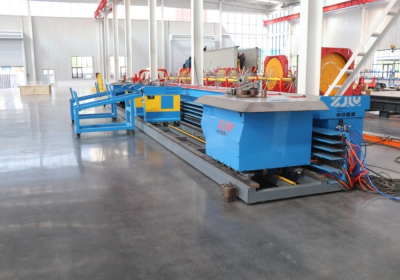
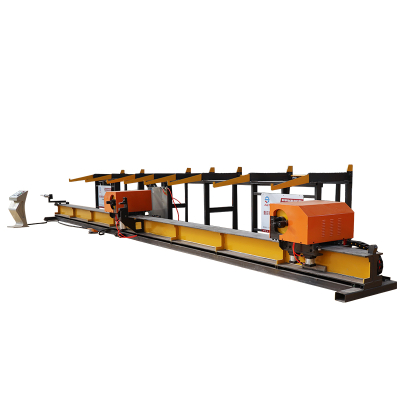
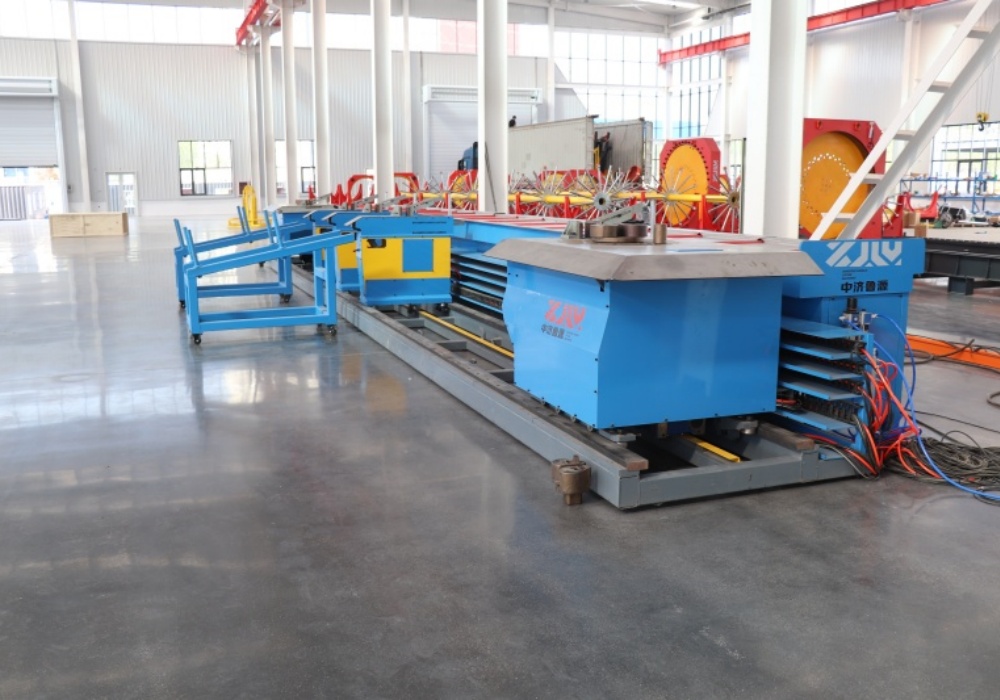
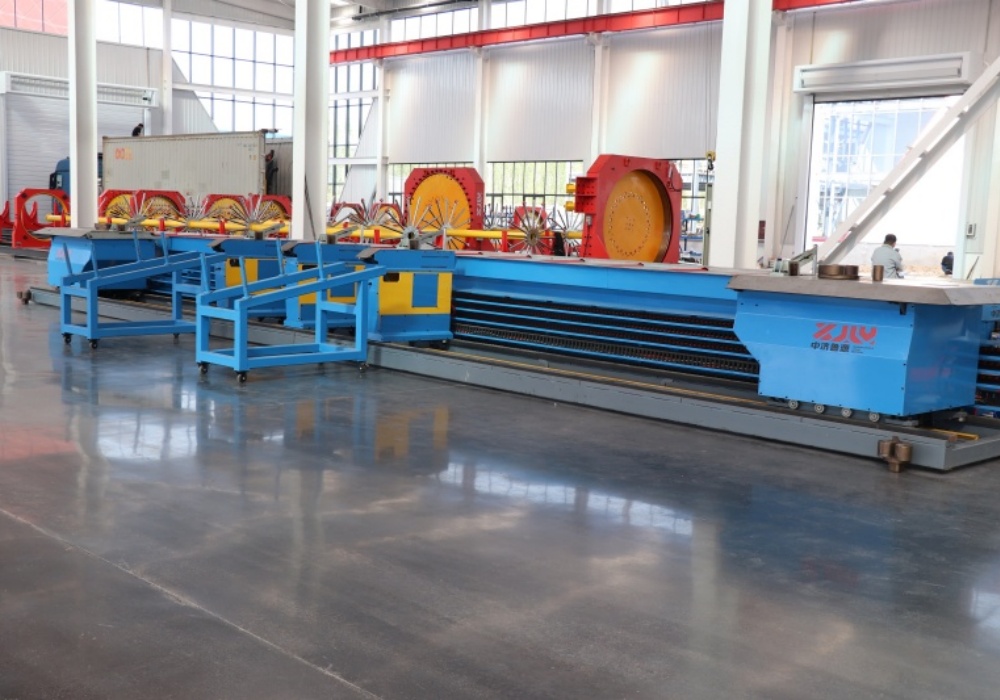
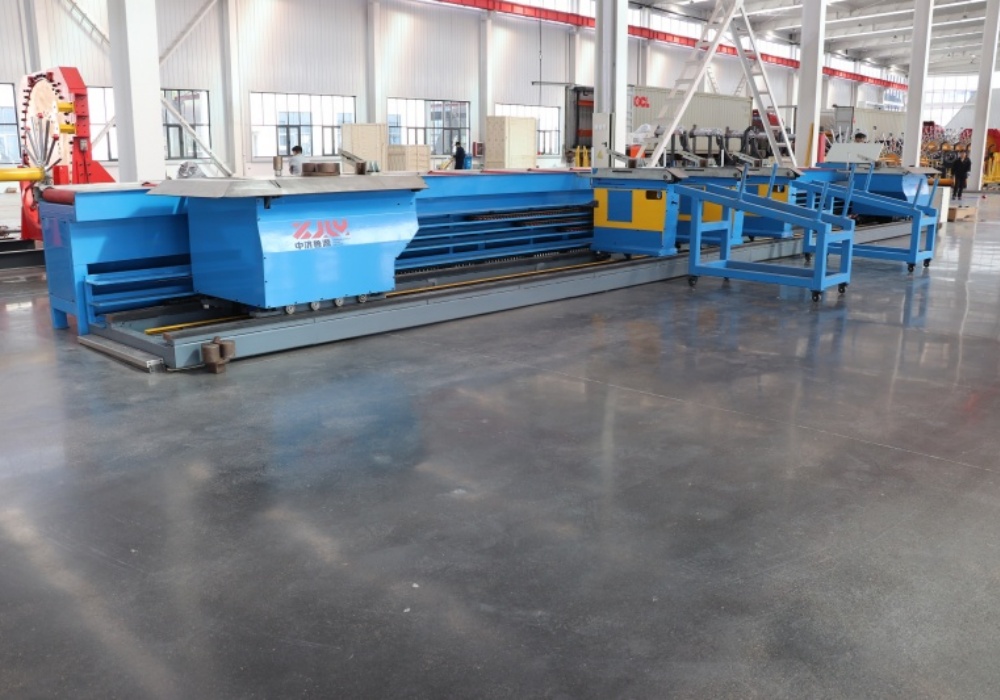
The stable and efficient operation of a fully automatic CNC rebar bending machine depends on its integrated modular structure. Each functional module operates independently and cooperates synergistically, ensuring long-term continuous operation and precise bending accuracy. The core structure is divided into five key parts, covering mechanical transmission, control system, and auxiliary devices.
1. Heavy-Duty Machine Frame and Transmission System
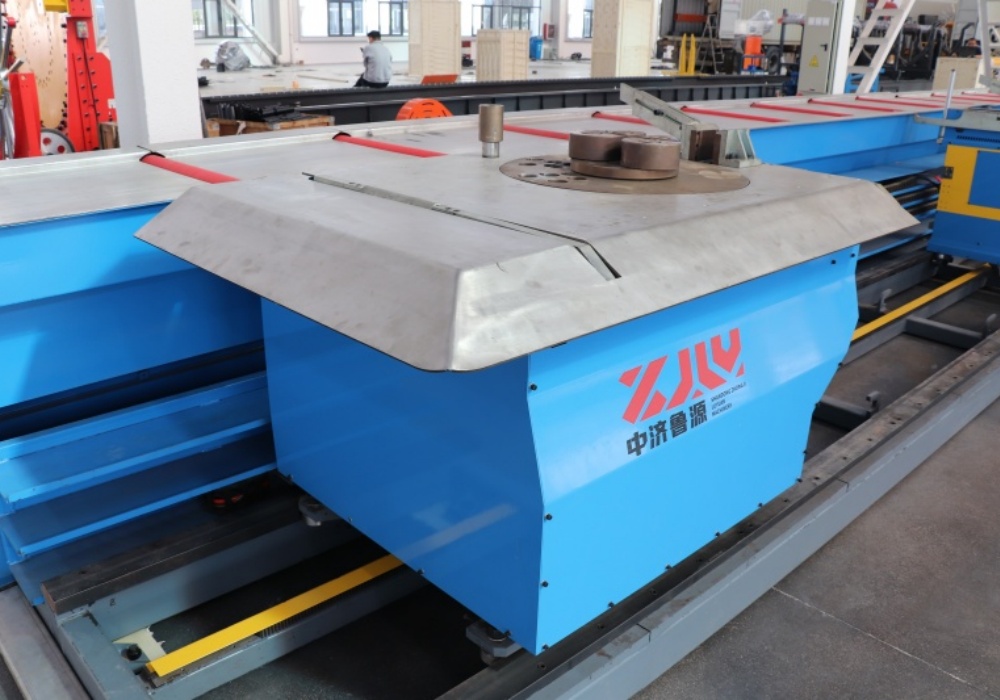
The main frame adopts integral cast steel and thickened welded steel plate structure, which effectively resists vibration and structural deformation during high-load bending operations. Different from ordinary bending equipment, the frame of the CNC rebar bending machine undergoes aging treatment to eliminate internal stress, ensuring long-term dimensional stability. The internal transmission system adopts high-precision servo motors and reducer assemblies, providing stable torque output to meet the bending requirements of high-strength rebars. The linear guide rail ensures smooth feeding and positioning of steel bars, avoiding jamming and displacement during processing.
2. Intelligent CNC Control System
As the core brain of the equipment, the PLC+HMI integrated control system supports graphical programming and one-click parameter setting. Operators can input bending angles, lengths, and forming shapes through the touch screen, and the system automatically generates processing programs. ThePLC-controlled CNC rebar bending machine supports storing hundreds of common rebar forming templates, including stirrups, U-shaped bars, L-shaped bars, and special-shaped reinforcement parts, realizing rapid switching of different processing requirements. In addition, the system is equipped with automatic error correction and counting functions to monitor processing status in real time.
3. Precision Bending and Positioning Mechanism
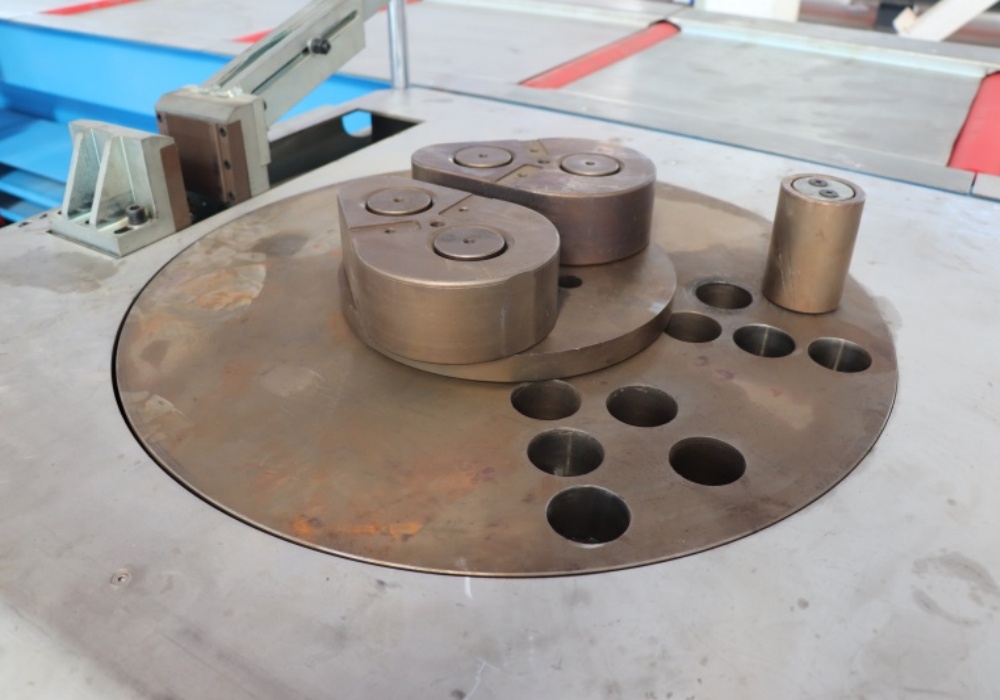
The bending mechanism consists of high-hardness bending shafts, positioning pins and limit baffles, made of wear-resistant alloy steel to reduce friction loss during repeated bending. The adjustable positioning module can accurately control the feeding length and bending angle of rebars, with an angle error controlled within ±0.5°. This module is the key to ensuring the uniformity of finished reinforcement parts and meeting national and international construction engineering standards.
4. Automatic Feeding and Straightening Device
Matching with the main machine, the automatic feeding rack and straightening mechanism realize integrated feeding, straightening and bending. It can automatically arrange and convey coiled rebars and straighten deformed steel bars, effectively improving processing continuity and reducing manual intervention. This configuration is standard for high-efficiency automatic CNC rebar bending equipment used in large-scale precast factories.
5. Safety Protection and Auxiliary System
The equipment is equipped with emergency stop devices, overload protection, and infrared safety induction modules. When abnormal load, equipment failure or illegal operation occurs, the system will automatically cut off the power and stop running to avoid equipment damage and personal injury. The heat dissipation and lubrication system ensures stable operation of the equipment during long-hour continuous production, extending the service life of mechanical parts.
Key Technical Parameters of CNC Rebar Bending Machine
Technical parameters are the core basis for equipment selection, directly determining the processing range, production efficiency and application scenarios of the CNC rebar bending machine. The mainstream standard parameters of industrial-grade equipment are summarized below, adapting to most civil engineering and infrastructure projects:
Processing Rebar Diameter Range: 6mm–32mm, covering ordinary round steel and threaded steel bars commonly used in construction;
Bending Angle Accuracy: ±0.5°, feeding accuracy ±1mm, fully compliant with international construction reinforcement processing standards;
Maximum Processing Speed: 15–25 meters per minute, effectively improving batch processing efficiency of stirrups and shaped rebars;
Rated Power: 7.5KW–15KW, with low energy consumption and high energy utilization rate, suitable for long-term industrial operation;
Processing Forms: Supports one-time forming of square stirrups, rectangular stirrups, L-shaped, U-shaped, and special-shaped customized rebars;
Working Voltage: 380V/50Hz three-phase industrial power supply, adaptable to on-site power conditions of construction sites and precast plants;
Equipment Weight and Dimension: Medium-sized equipment weighs 1800–3000kg, with compact structure, convenient for on-site installation and transfer.
High-end models support customized parameters such as ultra-thick rebar processing and multi-angle continuous bending, meeting the personalized processing needs of large-scale infrastructure projects.
Complete Working Process of CNC Rebar Bending Machine
The operation flow of the CNC rebar bending machine is standardized and automated, with simple manual intervention. The whole process realizes intelligent processing from parameter setting to finished product output, which is also the core advantage different from traditional manual and semi-automatic bending equipment.
1. Pre-Operation Preparation and Parameter Setting
Before starting the equipment, operators need to check the tightness of mechanical parts, the normal operation of the safety system and the power supply status. According to the engineering reinforcement drawing requirements, input the rebar diameter, bending angle, bending size and processing quantity on the CNC touch screen. For conventional processing parts, directly call the stored system template to complete one-click parameter configuration, which greatly shortens the setup time. This step is the key to standardized processing of high-precision CNC rebar bending for construction projects.
2. Automatic Feeding and Straightening
After the program is started, the equipment automatically conveys the raw rebars from the feeding rack to the straightening mechanism. The multi-group straightening rollers calibrate the bent and deformed steel bars to ensure the flatness of the raw materials, avoiding size deviation of finished products caused by raw material deformation. The servo feeding system controls the feeding length accurately according to the set parameters.
3. Intelligent Bending and Forming
The steel bar is transported to the bending station, and the system automatically adjusts the position of the bending shaft and limit baffle. According to the preset angle and size, the equipment completes multi-angle continuous bending at one time. During the processing, the system monitors the bending torque and position in real time. If there is rebar deviation or overload, it will automatically alarm and correct to ensure the consistency of each finished product.
4. Cutting, Discharging and Counting Statistics
After the bending forming is completed, the equipment automatically cuts the steel bar according to the fixed length, and the finished reinforcement parts are automatically discharged through the discharge port. The built-in counting system automatically records the processing quantity, which is convenient for engineering personnel to count materials and control production progress. After the batch processing is completed, the equipment automatically resets and waits for the next program instruction.
Main Industrial Applications of CNC Rebar Bending Machine
With its high precision and high efficiency, the CNC rebar bending machine has become essential core equipment in modern reinforcement processing, and is widely used in multiple construction scenarios. It is the preferred equipment for industrial CNC rebar bending for precast concrete components.
In civil building construction, the equipment is used for batch processing of foundation, beam, column and floor reinforcement stirrups, solving the problems of slow manual processing and inconsistent size of on-site reinforcement. In infrastructure projects such as bridges, tunnels and highways, it meets the processing requirements of high-standard special-shaped reinforcement parts and ensures the structural safety of large-scale engineering projects.
In precast component factories, the automated processing mode of the CNC rebar bending machine matches the assembly line production mode of precast concrete parts, greatly improving the standardized production level of precast components. At the same time, it is also applicable to water conservancy projects, municipal engineering and railway construction, covering almost all scenarios requiring reinforced concrete structures.
Core Advantages of CNC Rebar Bending Machine
Compared with traditional manual bending and semi-automatic bending equipment, the CNC rebar bending machine has obvious comprehensive advantages. First, it achieves ultra-high processing accuracy, effectively avoids rework caused by size errors, and reduces material waste. Second, the automated operation greatly reduces labor dependence, saves labor costs for enterprises, and improves production efficiency by more than 3 times compared with manual operation.
In addition, the intelligent control system realizes standardized processing, all finished reinforcement parts have uniform specifications, which fully meets the acceptance standards of international engineering projects. The equipment has stable performance, low failure rate and long service life, which can adapt to long-term high-intensity on-site construction and factory batch production, bringing stable economic benefits for construction enterprises.
Conclusion & Professional CTA
As construction engineering continues to develop towards intelligence, standardization and high efficiency, traditional manual reinforcement processing methods can no longer meet the requirements of modern large-scale projects. The CNC rebar bending machine, with its precise numerical control technology, stable mechanical structure and efficient automated processing capacity, has become an indispensable key equipment in the construction industry, helping enterprises improve processing quality, shorten construction cycles and reduce comprehensive costs.
If you are looking for high-quality, stable and high-efficiency CNC rebar bending equipment to upgrade your reinforcement processing workflow, our professional team can provide you with one-stop solutions. Contact us now to obtain customized project quotations, detailed official technical parameter manuals, and equipment operation case materials. We also support customized equipment configuration according to your project processing needs and provide professional after-sales technical guidance to help your engineering projects achieve efficient and standardized production.
Leave your messages