
What Is a Rebar Stirrup Bending Machine?
What Is a Rebar Stirrup Bending Machine?
A rebar stirrup bending machine is a piece of automated equipment that cuts steel bar or wire into fixed lengths and bends them into closed rectangular, square, or custom-shaped stirrups used to reinforce concrete members. For overseas buyers who purchase rebar processing equipment, understanding what this machine does, how it differs from manual bending, and what to check before ordering can save months of trial and error on site. This article explains the working principle, the main technical features, typical application scenarios, and the practical questions buyers most often ask before investing in one.
Why Stirrup Quality Matters in Modern Construction
Stirrups are the closed steel hoops wrapped around longitudinal reinforcement in columns, beams, piles, and bridge girders. They resist shear forces, hold the reinforcement cage in the correct position during concrete pouring, and play a critical role in seismic performance. A stirrup with inaccurate dimensions or inconsistent angles cannot hold the cage geometry, which leads to rework, slower pouring, and in the worst cases rejected structural elements.
Across many markets, contractors are moving away from hand bending on site. Manual bending depends heavily on worker skill, produces uneven dimensions across thousands of pieces, and exposes workers to repetitive strain injuries. At the same time, project schedules have become tighter and quality inspection has become stricter, especially on infrastructure projects such as bridges and high-speed rail lines. This is why demand for automated stirrup production has grown steadily, and why the rebar stirrup bending machine has become a standard fixture in centralized rebar processing plants rather than an optional luxury.
How a CNC Stirrup Bender Works
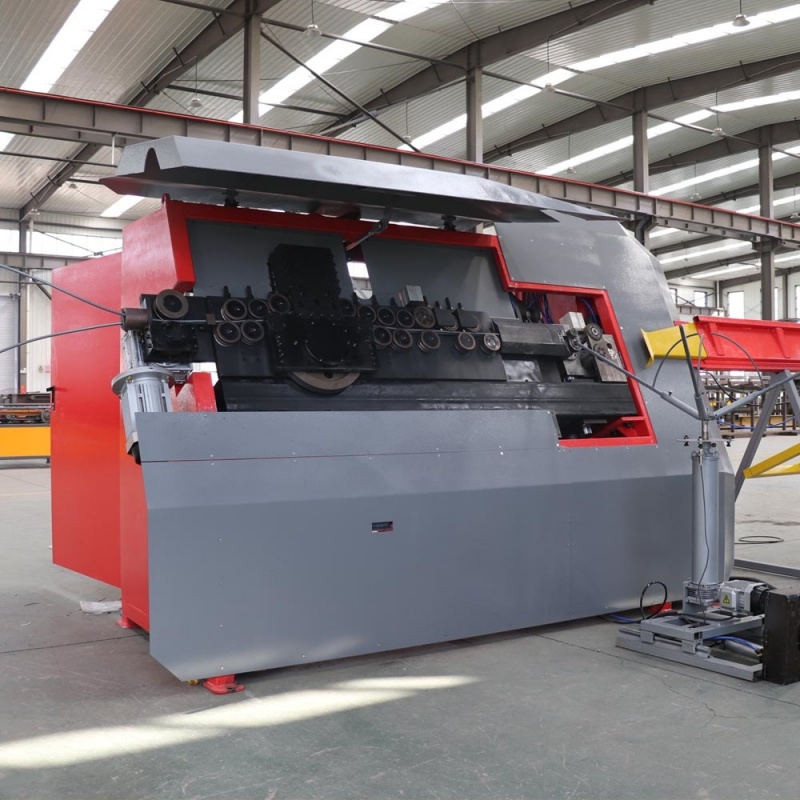
A modern CNC stirrup bender takes raw material from a coil of debar or cold-rolled ribbed wire, straightens it through a set of straightening rollers, feeds it to a precise length under servo control, bends it according to the programmed shape, and cuts it off — all in one continuous cycle. The bending head rotates at programmed angles while the servo feed system pushes the bar forward step by step, so each leg length and each bend angle is controlled by the motion controller instead of by hand.
The key components are the straightening system, the servo-driven feed rollers, the rotating bending head, the hydraulic or servo cutting unit, and the control system that stores stirrup shapes as recipes. Because the feeding and bending are closed-loop controlled with encoders, dimensional accuracy stays consistent from the first piece to the last, even when producing tens of thousands of identical stirrups. Higher-end models use double bending heads that can form complex shapes in both directions and reduce cycle time. Most industrial machines handle common bar diameters in a range suitable for stirrup work, but the exact capacity always depends on the model configuration, so buyers should match the machine range to their typical bar sizes rather than assuming one size fits all.
Automatic Stirrup Bending vs Manual Bending
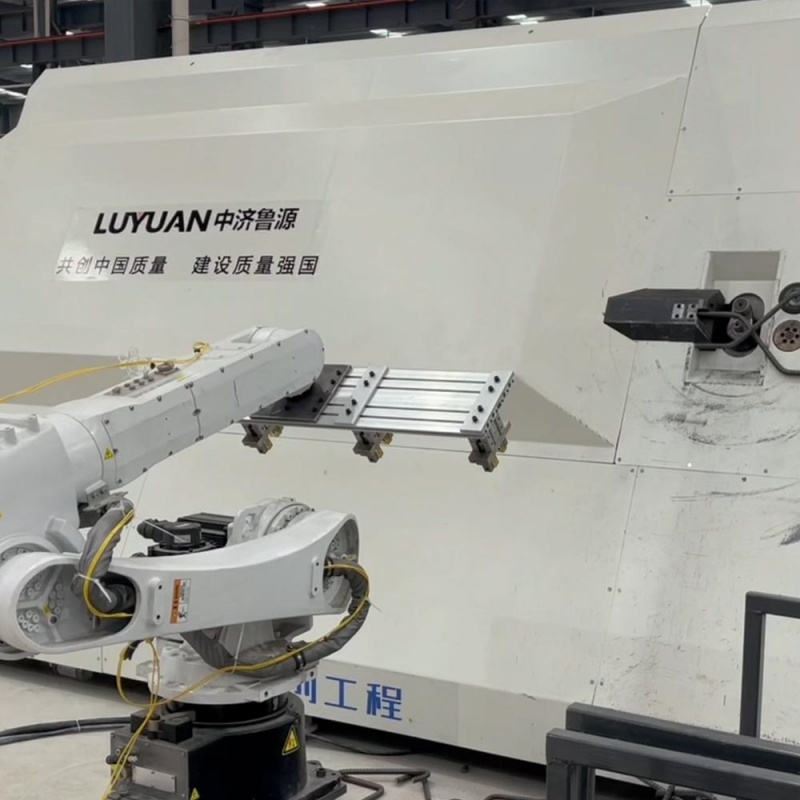
The practical difference shows up in three areas: consistency, speed, and labor. With manual jig bending, each worker produces a limited number of stirrups per hour, and dimensions vary with fatigue and skill. An automatic stirrup bending machine, once a recipe is programmed, repeats the same geometry indefinitely and only requires an operator to load coils and monitor output. For a rebar processing factory that supplies multiple projects, this means one machine can replace a small bending team while freeing skilled workers for higher-value tasks such as cage assembly and quality inspection.
Cost is the other side of the comparison. A CNC machine involves a higher upfront investment, power consumption, and maintenance planning. Buyers should therefore evaluate production volume honestly: if a project requires only a few thousand stirrups occasionally, manual bending or a simple semi-automatic machine may be enough. If a factory produces stirrups daily for bridges, pile caps, or precast elements, the automation typically pays back through labor savings and reduced material waste from inaccurate pieces.
Application Scenarios: Pile Foundations, Bridges, High-Speed Rail, and Rebar Factories
In pile foundation work, stirrups are bent and welded or tied into cylindrical cages that are lowered into drilled shafts. Cage fabrication shops that supply piling contractors need large quantities of consistent stirrups, which makes automatic bending a natural fit alongside a cage welding line.
In bridge and viaduct construction, pier columns, cap beams, and girders all require stirrups with strict dimensional tolerances, and quality inspectors routinely check stirrup spacing and geometry. High-speed rail projects raise the bar further, with dense reinforcement in track slabs, pier structures, and precast segments produced under tight schedules. For central rebar processing plants, a stirrup bender is usually paired with a rebar shearing line, a bending center for large-diameter bars, and cage welding machines, forming a complete automated fabrication flow from raw bar to finished assembly.
Choosing the Right Configuration
When comparing models, buyers should look beyond price and check the following points against their own projects: the bar diameter and strength grades the machine is rated for; the range of stirrup shapes it can program; bending angle accuracy and repeat positioning precision; maximum feed speed; whether the bending head supports double-direction bending; and how quickly shape recipes can be changed on the control panel. It is also worth confirming the level of after-sales support, spare parts availability, and whether the control interface supports the language your operators use.
Luyuan Machinery manufactures CNC stirrup bending machines for international B2B buyers, covering common stirrup shapes such as rectangles, squares, polygons, hooks, and special profiles for precast and piling applications. Details, specifications, and configuration options are available on the product page: https://www.luyuanmachine.com/stirrup-bender/. The equipment is designed for rebar processing factories and construction contractors that need steady daily output with consistent geometry, and the configuration can be matched to your typical bar diameter range and project types.
Frequently Asked Questions
1. What exactly does a rebar stirrup bending machine produce?
It produces closed stirrups — rectangular, square, polygonal, and hooked shapes — from steel bar or ribbed wire. The machine straightens, measures, bends, and cuts each piece automatically according to a programmed shape, delivering finished stirrups ready for cage assembly.
2. How is a CNC stirrup bender different from a manual bending tool?
A CNC machine controls every leg length and bend angle with servo drives and encoders, so all pieces come out identical. Manual bending relies on worker skill and fixtures, which is slower and less consistent, especially at production volumes above a few thousand pieces.
3. What bar diameters can an automatic stirrup bending machine handle?
Capacity depends on the model. Machines are typically rated for a range of common stirrup-grade bar diameters, and buyers should confirm the rated range against the bars they actually use, including the steel strength grade, before ordering.
4. What affects the price of a stirrup bending machine?
Main factors include bar diameter capacity, single or double bending head, straightening system design, feed speed, level of automation, control system features, and shipping cost to the destination port. Configuration choices should follow your production volume and product mix rather than price alone.
5. Can one machine produce different stirrup shapes?
Yes. Shape programs are stored in the controller, and changing from one shape to another usually only requires selecting a recipe and adjusting parameters. This flexibility is one of the main advantages over fixed manual jigs.
Summary
A rebar stirrup bending machine converts coiled steel bar into dimensionally consistent stirrups automatically, replacing slow and variable manual bending with servo-controlled accuracy. For contractors and rebar processors supplying pile foundations, bridges, high-speed rail works, or precast production, it directly improves quality consistency and reduces labor dependence. When selecting equipment, match the machine's diameter capacity, shape flexibility, and output speed to your real production volume.
If you are evaluating a stirrup bender for your factory or project, contact Luyuan Machinery for detailed specifications, configuration recommendations, and a quotation based on your bar sizes and daily output requirements. Our team can help you choose the right model and arrange a working demonstration of the bending process.


